
New Boiler Cost Warrington: Can Older Pipework Increase the Installation Price?
Older pipework can affect your new boiler installation cost in Warrington. Discover how pipe condition, circulation issues and necessary upgrades may influence the final price.

Why you can trust our content
We understand that the boiler industry can be confusing, with plenty of outdated or misleading information. That’s why we rely only on trusted, proven sources to guide our advice and installations:

At a glance
Introduction
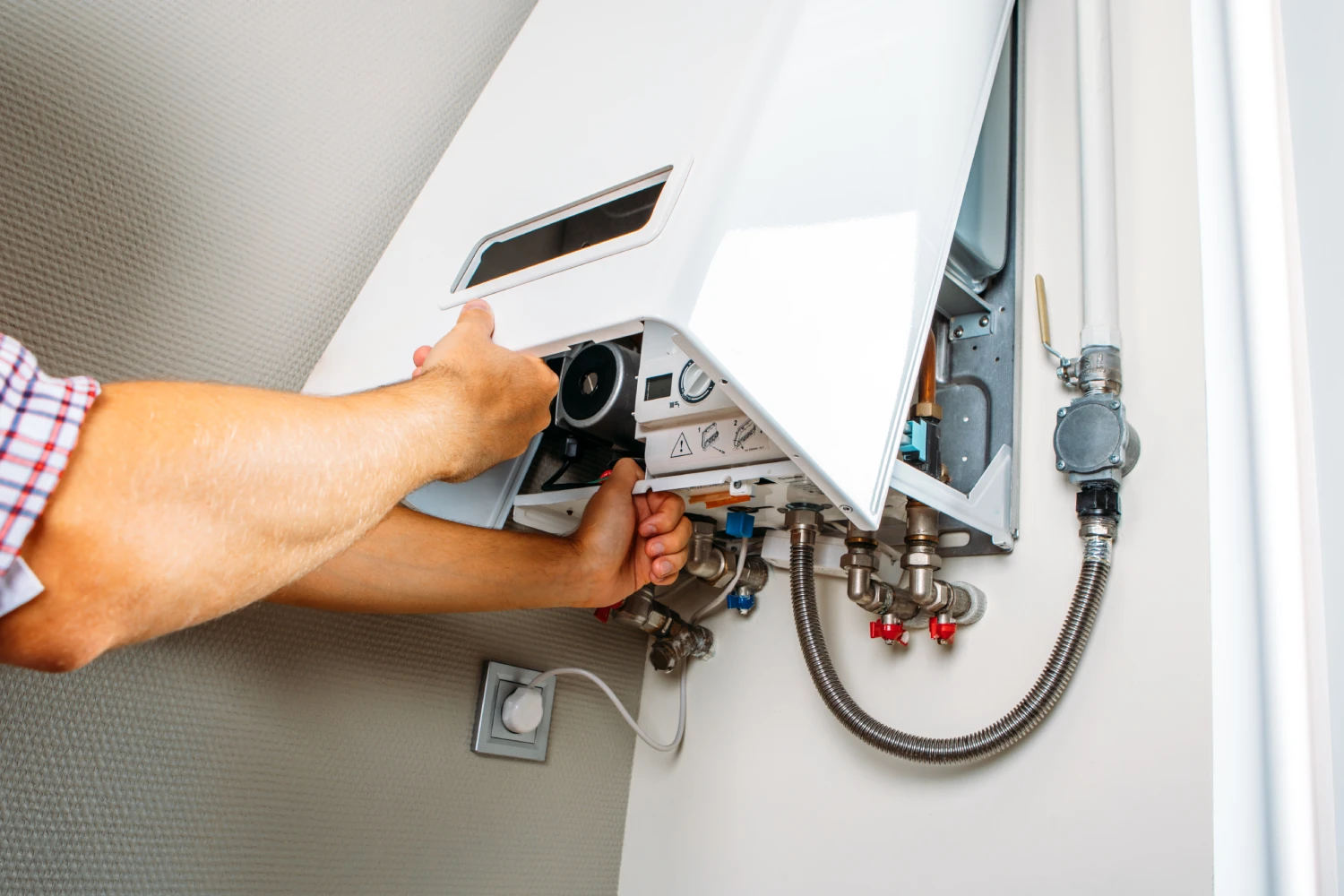
When homeowners start researching a new boiler, the appliance itself is often the first thing they look at. However, the boiler is only one part of the installation. The condition and layout of the existing heating system can also affect the amount of work involved.
Older properties can present additional considerations, particularly where existing pipework has been in place for many years. It may be perfectly suitable for continued use, or it may need cleaning, repairing or altering before a replacement boiler can be installed correctly.
Understanding these factors can make it easier to interpret a quotation and understand what you are actually paying for.
If you are researching new boiler cost Warrington, looking beyond the boiler model and considering the installation requirements can give you a much more realistic picture of the overall project.
What Does a New Boiler Installation Usually Include?
A boiler replacement is more than simply removing one appliance and installing another.
Depending on the property and system, an installation may involve:
- Removing the existing boiler.
- Installing the replacement appliance.
- Connecting the boiler to the heating and hot water system.
- Connecting the appliance to the gas supply.
- Connecting the condensate arrangement where applicable.
- Updating controls where required.
- Making necessary pipework alterations.
- Testing and commissioning the system.
- Providing the relevant installation documentation.
The exact scope depends on the existing setup. A straightforward replacement in a modern property may require relatively little alteration, while an older heating system may need additional preparation.
This is why two households buying similar boilers can receive noticeably different installation quotations.
Let’s get started, Which fuel powers your boiler?
Mains Gas
LPG
It just takes 60 Seconds
And then you can book a free consultation
Can Older Pipework Increase the Price of a New Boiler?
Yes, but it does not automatically mean that it will.
Older pipework can increase the installation price if it needs to be altered, repaired or replaced to support the new boiler and heating system. However, age alone is not enough reason to replace pipework.
An installer should consider its condition, size, layout and performance.
For example, copper pipework that has been installed for decades may still be perfectly serviceable. If it is correctly sized, free from significant corrosion and capable of supporting the proposed system, there may be little reason to disturb it.
By contrast, pipework that is leaking, heavily restricted or unsuitable for the new installation may require attention.
The important distinction is between old pipework and problematic pipework. They are not necessarily the same thing.
Which Pipework Issues Can Add to Installation Costs?
Several pipework-related issues can affect the amount of work required.
Incorrect or unsuitable pipe sizing
Pipe diameter can influence water flow through the heating system. If sections are too small for the requirements of the system, an installer may recommend alterations.
Damaged or deteriorated pipework
Visible corrosion, leaking joints or damaged sections may need to be repaired before or during the boiler replacement.
Restricted flow
Sludge, debris and deposits can reduce circulation. Cleaning may be recommended where the condition of the system could affect the replacement boiler.
Difficult access
Pipework hidden beneath flooring, inside walls or behind finished surfaces can take considerably more time to access than exposed pipework.
Changes to the boiler position
If the replacement boiler is being installed in a different location, additional pipework may be needed to connect the appliance correctly.
These factors can all contribute to boiler installation costs, but the impact varies significantly from one property to another.
Does Every Older Heating System Need New Pipework?
No.
There is no blanket requirement to replace all existing heating pipework simply because a boiler is being upgraded.
A professional assessment should determine whether the current system is suitable for continued use. Where pipework is sound and performs adequately, retaining it can avoid unnecessary disruption.
Replacing an entire heating circuit can involve lifting floors, opening access panels or disturbing finished areas of the home. If the existing installation is performing properly, there may be little practical benefit in undertaking such work.
On the other hand, keeping unsuitable pipework simply to avoid additional work can create problems later.
The decision should therefore be based on the actual condition and requirements of the system.
How Does Access Affect the Final Price?
Access is one of the less obvious factors that can influence installation costs.
Consider two properties with identical boilers. In one, the existing connections are easily accessible beneath the boiler. In the other, pipework runs behind a tiled wall or underneath a finished floor.
The boiler itself has not changed, but the amount of labour involved can be very different.
Access can affect:
- How quickly existing components can be removed.
- How easily pipework can be modified.
- Whether flooring or panels need to be lifted.
- How materials can be brought into the installation area.
- How much time is required for testing and finishing.
This is one reason a proper survey is useful before a final quotation is agreed.
Could Changing the Boiler Location Increase the Price?
Yes.
Moving a boiler can involve considerably more work than replacing an existing appliance in the same position.
The new location may require changes to heating flow and return pipework, gas pipework, condensate arrangements, electrical connections and controls. The installer also needs to consider ventilation and manufacturer installation requirements where relevant.
The practical consequences depend on the proposed location.
For instance, moving a boiler from one side of a property to another could involve considerably more pipework than replacing it in the existing position. Moving it within the same general area may be much simpler.
If you are comparing new boiler cost Warrington quotations, check whether the prices are based on the same boiler location and installation scope. Otherwise, a direct price comparison may not be meaningful.
What Other Factors Affect Boiler Installation Costs?
Pipework is only one consideration.
Other factors may include:
|
Factor |
Potential impact |
|
Boiler type |
Different systems have different installation requirements |
|
Boiler size |
The appliance needs to be suitable for the property’s demand |
|
Boiler location |
Moving the appliance can require additional work |
|
Existing controls |
Controls may need updating or replacing |
|
Flue arrangement |
The existing flue may not be suitable for the replacement |
|
Condensate route |
A suitable route needs to be available |
|
Pipework condition |
Repairs or alterations may be necessary |
|
System condition |
Cleaning or preparation may be recommended |
|
Access |
Difficult access can increase labour time |
|
Additional heating work |
Radiators, valves or other components may require attention |
Not every project will involve all of these items. The purpose of an assessment is to establish which ones actually apply.
Why Can Two Boiler Quotations Be Different?
It is common for homeowners to receive different quotations for what appears to be the same boiler.
This does not necessarily mean that one installer is simply charging more for the appliance.
The quotations may cover different levels of work. One may include system preparation, new controls or pipework alterations, while another may assume that the existing system can be reused without modification.
A quotation should therefore be assessed by looking at the complete scope rather than focusing solely on the headline figure.
Ask whether the price includes:
- Boiler supply.
- Installation labour.
- Removal of the existing appliance.
- Required pipework alterations.
- Controls.
- Flue components where applicable.
- System preparation.
- Commissioning.
- Installation documentation.
This gives you a clearer basis for comparison.
When discussing your replacement with UK Gas Group, ask the installer to explain any recommended pipework alterations and why they are required. Understanding the reasoning behind the work can make the quotation much easier to assess.
Can Cleaning the Existing System Add to the Cost?
It can, although system cleaning is often recommended because of the condition of the heating circuit rather than simply because the pipework is old.
Over time, heating systems can accumulate sludge and debris. If circulation is poor, radiators may heat unevenly and components can be placed under additional strain.
A replacement boiler may also be installed alongside system preparation designed to help protect the new appliance.
The appropriate cleaning method depends on the condition of the system. In some cases, straightforward cleaning may be sufficient. More heavily contaminated systems may require a more intensive approach.
The important point is that cleaning should have a clear purpose. Homeowners should be able to understand what the installer has identified and why the proposed treatment is appropriate.
Is Cheap Boiler Installation Always the Cheapest Option?
Not necessarily.
A low initial quotation can become more expensive if necessary work has not been identified before installation.
For example, an initial price might assume that existing pipework can be connected without alteration. Once work starts, the installer may discover damaged connections or unsuitable sections that need attention.
This is why a detailed quotation is valuable.
A slightly higher quotation that clearly explains the complete scope may provide a more accurate representation of the total project than a very low headline price with several exclusions.
When comparing boiler installation costs, look at what each quotation includes rather than comparing numbers in isolation.
A Typical Older Warrington Property Scenario
Imagine a traditional semi-detached home with an ageing boiler installed in a kitchen cupboard. The property has copper heating pipes that have been in place for many years, with some sections running beneath the floor.
The homeowner wants to replace the boiler but is concerned that the age of the heating system will make the project significantly more expensive.
During an assessment, the installer finds that most of the pipework is in good condition. However, one accessible section has an old connection that should be replaced, while the existing controls are also due for an upgrade.
Instead of replacing the entire heating circuit, the installation can be planned around the specific work identified.
This demonstrates why an assessment is important. Older pipework does not automatically mean a major refurbishment is necessary.
What Should You Ask Before Accepting a Boiler Quote?
A few straightforward questions can help establish whether a quotation accurately reflects your property.
Ask:
- Has the existing pipework been inspected?
- Are any alterations included in the price?
- If alterations are needed, which sections are affected?
- Is the boiler being installed in the existing position?
- Are new controls included?
- Is system cleaning recommended?
- Are there any exclusions or potential additional costs?
- Does the quoted price include removal of the existing boiler?
You can also ask the installer to explain which parts of the quotation are essential and which are optional improvements.
This makes it easier to make an informed decision without assuming that every recommended upgrade is mandatory.
How Can You Get a More Accurate Boiler Installation Price?
The best way to establish the likely cost is to have the property assessed rather than relying solely on online prices.
An installer can look at the existing boiler, pipework, controls, flue arrangement, heating system and access conditions. This provides a much better basis for preparing a quotation.
For homeowners researching new boiler cost Warrington, a property-specific assessment can also highlight potential issues before installation day.
It means the quotation is based on the actual installation rather than an assumption about what the property contains.
If you are considering replacing an older boiler, contact UK Gas Group to discuss your requirements. Our team can assess the existing system and provide tailored guidance on the work involved, including any pipework considerations.
Conclusion
The cost of replacing a boiler depends on much more than the appliance selected. Existing pipework, access, controls, boiler position and the condition of the wider heating system can all influence the work required.
Older pipework does not automatically mean an expensive installation. In many properties, much of the existing system can remain in place, with only specific sections requiring attention.
The most reliable approach is to have the property assessed before agreeing to the work. UK Gas Group can help identify the practical requirements of the installation and explain any recommended alterations clearly, giving homeowners a better understanding of the project from the outset.
Related articles



Let’s get started, Which fuel powers your boiler?
Mains Gas
LPG
At a glance
Introduction
When homeowners start researching a new boiler, the appliance itself is often the first thing they look at. However, the boiler is only one part of the installation. The condition and layout of the existing heating system can also affect the amount of work involved.
Older properties can present additional considerations, particularly where existing pipework has been in place for many years. It may be perfectly suitable for continued use, or it may need cleaning, repairing or altering before a replacement boiler can be installed correctly.
Understanding these factors can make it easier to interpret a quotation and understand what you are actually paying for.
If you are researching new boiler cost Warrington, looking beyond the boiler model and considering the installation requirements can give you a much more realistic picture of the overall project.
What Does a New Boiler Installation Usually Include?
A boiler replacement is more than simply removing one appliance and installing another.
Depending on the property and system, an installation may involve:
- Removing the existing boiler.
- Installing the replacement appliance.
- Connecting the boiler to the heating and hot water system.
- Connecting the appliance to the gas supply.
- Connecting the condensate arrangement where applicable.
- Updating controls where required.
- Making necessary pipework alterations.
- Testing and commissioning the system.
- Providing the relevant installation documentation.
The exact scope depends on the existing setup. A straightforward replacement in a modern property may require relatively little alteration, while an older heating system may need additional preparation.
This is why two households buying similar boilers can receive noticeably different installation quotations.
Let’s get started, Which fuel powers your boiler?
Mains Gas
LPG
It just takes 60 Seconds
And then you can book a free consultation
Can Older Pipework Increase the Price of a New Boiler?
Yes, but it does not automatically mean that it will.
Older pipework can increase the installation price if it needs to be altered, repaired or replaced to support the new boiler and heating system. However, age alone is not enough reason to replace pipework.
An installer should consider its condition, size, layout and performance.
For example, copper pipework that has been installed for decades may still be perfectly serviceable. If it is correctly sized, free from significant corrosion and capable of supporting the proposed system, there may be little reason to disturb it.
By contrast, pipework that is leaking, heavily restricted or unsuitable for the new installation may require attention.
The important distinction is between old pipework and problematic pipework. They are not necessarily the same thing.
Which Pipework Issues Can Add to Installation Costs?
Several pipework-related issues can affect the amount of work required.
Incorrect or unsuitable pipe sizing
Pipe diameter can influence water flow through the heating system. If sections are too small for the requirements of the system, an installer may recommend alterations.
Damaged or deteriorated pipework
Visible corrosion, leaking joints or damaged sections may need to be repaired before or during the boiler replacement.
Restricted flow
Sludge, debris and deposits can reduce circulation. Cleaning may be recommended where the condition of the system could affect the replacement boiler.
Difficult access
Pipework hidden beneath flooring, inside walls or behind finished surfaces can take considerably more time to access than exposed pipework.
Changes to the boiler position
If the replacement boiler is being installed in a different location, additional pipework may be needed to connect the appliance correctly.
These factors can all contribute to boiler installation costs, but the impact varies significantly from one property to another.
Does Every Older Heating System Need New Pipework?
No.
There is no blanket requirement to replace all existing heating pipework simply because a boiler is being upgraded.
A professional assessment should determine whether the current system is suitable for continued use. Where pipework is sound and performs adequately, retaining it can avoid unnecessary disruption.
Replacing an entire heating circuit can involve lifting floors, opening access panels or disturbing finished areas of the home. If the existing installation is performing properly, there may be little practical benefit in undertaking such work.
On the other hand, keeping unsuitable pipework simply to avoid additional work can create problems later.
The decision should therefore be based on the actual condition and requirements of the system.
How Does Access Affect the Final Price?
Access is one of the less obvious factors that can influence installation costs.
Consider two properties with identical boilers. In one, the existing connections are easily accessible beneath the boiler. In the other, pipework runs behind a tiled wall or underneath a finished floor.
The boiler itself has not changed, but the amount of labour involved can be very different.
Access can affect:
- How quickly existing components can be removed.
- How easily pipework can be modified.
- Whether flooring or panels need to be lifted.
- How materials can be brought into the installation area.
- How much time is required for testing and finishing.
This is one reason a proper survey is useful before a final quotation is agreed.
Could Changing the Boiler Location Increase the Price?
Yes.
Moving a boiler can involve considerably more work than replacing an existing appliance in the same position.
The new location may require changes to heating flow and return pipework, gas pipework, condensate arrangements, electrical connections and controls. The installer also needs to consider ventilation and manufacturer installation requirements where relevant.
The practical consequences depend on the proposed location.
For instance, moving a boiler from one side of a property to another could involve considerably more pipework than replacing it in the existing position. Moving it within the same general area may be much simpler.
If you are comparing new boiler cost Warrington quotations, check whether the prices are based on the same boiler location and installation scope. Otherwise, a direct price comparison may not be meaningful.
What Other Factors Affect Boiler Installation Costs?
Pipework is only one consideration.
Other factors may include:
|
Factor |
Potential impact |
|
Boiler type |
Different systems have different installation requirements |
|
Boiler size |
The appliance needs to be suitable for the property’s demand |
|
Boiler location |
Moving the appliance can require additional work |
|
Existing controls |
Controls may need updating or replacing |
|
Flue arrangement |
The existing flue may not be suitable for the replacement |
|
Condensate route |
A suitable route needs to be available |
|
Pipework condition |
Repairs or alterations may be necessary |
|
System condition |
Cleaning or preparation may be recommended |
|
Access |
Difficult access can increase labour time |
|
Additional heating work |
Radiators, valves or other components may require attention |
Not every project will involve all of these items. The purpose of an assessment is to establish which ones actually apply.
Why Can Two Boiler Quotations Be Different?
It is common for homeowners to receive different quotations for what appears to be the same boiler.
This does not necessarily mean that one installer is simply charging more for the appliance.
The quotations may cover different levels of work. One may include system preparation, new controls or pipework alterations, while another may assume that the existing system can be reused without modification.
A quotation should therefore be assessed by looking at the complete scope rather than focusing solely on the headline figure.
Ask whether the price includes:
- Boiler supply.
- Installation labour.
- Removal of the existing appliance.
- Required pipework alterations.
- Controls.
- Flue components where applicable.
- System preparation.
- Commissioning.
- Installation documentation.
This gives you a clearer basis for comparison.
When discussing your replacement with UK Gas Group, ask the installer to explain any recommended pipework alterations and why they are required. Understanding the reasoning behind the work can make the quotation much easier to assess.
Can Cleaning the Existing System Add to the Cost?
It can, although system cleaning is often recommended because of the condition of the heating circuit rather than simply because the pipework is old.
Over time, heating systems can accumulate sludge and debris. If circulation is poor, radiators may heat unevenly and components can be placed under additional strain.
A replacement boiler may also be installed alongside system preparation designed to help protect the new appliance.
The appropriate cleaning method depends on the condition of the system. In some cases, straightforward cleaning may be sufficient. More heavily contaminated systems may require a more intensive approach.
The important point is that cleaning should have a clear purpose. Homeowners should be able to understand what the installer has identified and why the proposed treatment is appropriate.
Is Cheap Boiler Installation Always the Cheapest Option?
Not necessarily.
A low initial quotation can become more expensive if necessary work has not been identified before installation.
For example, an initial price might assume that existing pipework can be connected without alteration. Once work starts, the installer may discover damaged connections or unsuitable sections that need attention.
This is why a detailed quotation is valuable.
A slightly higher quotation that clearly explains the complete scope may provide a more accurate representation of the total project than a very low headline price with several exclusions.
When comparing boiler installation costs, look at what each quotation includes rather than comparing numbers in isolation.
A Typical Older Warrington Property Scenario
Imagine a traditional semi-detached home with an ageing boiler installed in a kitchen cupboard. The property has copper heating pipes that have been in place for many years, with some sections running beneath the floor.
The homeowner wants to replace the boiler but is concerned that the age of the heating system will make the project significantly more expensive.
During an assessment, the installer finds that most of the pipework is in good condition. However, one accessible section has an old connection that should be replaced, while the existing controls are also due for an upgrade.
Instead of replacing the entire heating circuit, the installation can be planned around the specific work identified.
This demonstrates why an assessment is important. Older pipework does not automatically mean a major refurbishment is necessary.
What Should You Ask Before Accepting a Boiler Quote?
A few straightforward questions can help establish whether a quotation accurately reflects your property.
Ask:
- Has the existing pipework been inspected?
- Are any alterations included in the price?
- If alterations are needed, which sections are affected?
- Is the boiler being installed in the existing position?
- Are new controls included?
- Is system cleaning recommended?
- Are there any exclusions or potential additional costs?
- Does the quoted price include removal of the existing boiler?
You can also ask the installer to explain which parts of the quotation are essential and which are optional improvements.
This makes it easier to make an informed decision without assuming that every recommended upgrade is mandatory.
How Can You Get a More Accurate Boiler Installation Price?
The best way to establish the likely cost is to have the property assessed rather than relying solely on online prices.
An installer can look at the existing boiler, pipework, controls, flue arrangement, heating system and access conditions. This provides a much better basis for preparing a quotation.
For homeowners researching new boiler cost Warrington, a property-specific assessment can also highlight potential issues before installation day.
It means the quotation is based on the actual installation rather than an assumption about what the property contains.
If you are considering replacing an older boiler, contact UK Gas Group to discuss your requirements. Our team can assess the existing system and provide tailored guidance on the work involved, including any pipework considerations.
Conclusion
The cost of replacing a boiler depends on much more than the appliance selected. Existing pipework, access, controls, boiler position and the condition of the wider heating system can all influence the work required.
Older pipework does not automatically mean an expensive installation. In many properties, much of the existing system can remain in place, with only specific sections requiring attention.
The most reliable approach is to have the property assessed before agreeing to the work. UK Gas Group can help identify the practical requirements of the installation and explain any recommended alterations clearly, giving homeowners a better understanding of the project from the outset.