
Comparing Boiler Installation Companies: Who Checks the Existing Pipework Before Recommending a Boiler?
Compare boiler installation companies by checking whether they assess your existing pipework, identify any necessary alterations and explain the full installation costs before recommending a new boiler.

Why you can trust our content
We understand that the boiler industry can be confusing, with plenty of outdated or misleading information. That’s why we rely only on trusted, proven sources to guide our advice and installations:


At a glance
Introduction
Choosing a new boiler is often presented as a straightforward decision. Look at the available models, compare prices, check the warranty and arrange the installation.
In reality, the boiler itself is only one part of a heating system. The condition, layout and size of the existing pipework can influence how well the new appliance performs. Older properties may have smaller heating pipes, restricted sections, awkward routing or pipework that was originally designed around a different type of system.
This is why the quality of the installation survey matters.
When comparing the best boiler installation companies, homeowners should look beyond the boiler model and headline price. A thorough installer should understand the existing heating system before deciding what equipment is appropriate.
For a homeowner in Warrington, that can mean the difference between a genuinely suitable installation and a quotation that looks attractive but leaves important work unclear.
If you are considering replacing an older boiler, it is worth understanding what a proper assessment should include before comparing quotes.
What should a boiler installation company inspect before recommending a boiler?
A proper pre-installation assessment should look at more than where the existing boiler is located.
The installer should consider the property’s heating requirements, the existing system, the boiler position, hot water requirements, flue arrangements, gas supply and the condition of accessible pipework.
Pipework deserves particular attention because restrictions can affect the movement of heated water around the property. A modern boiler may be capable of delivering efficient heating, but the wider system still needs to circulate water effectively.
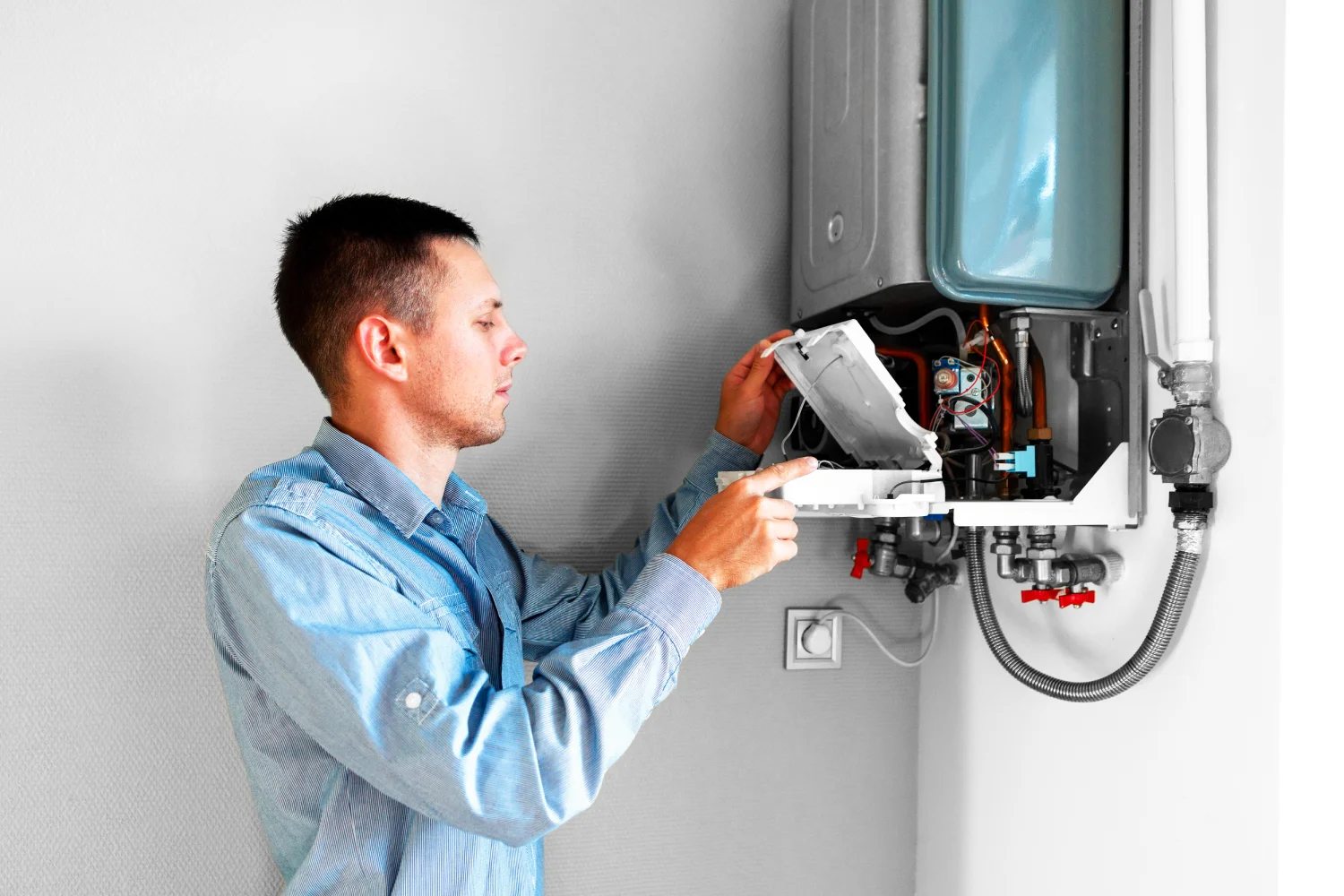
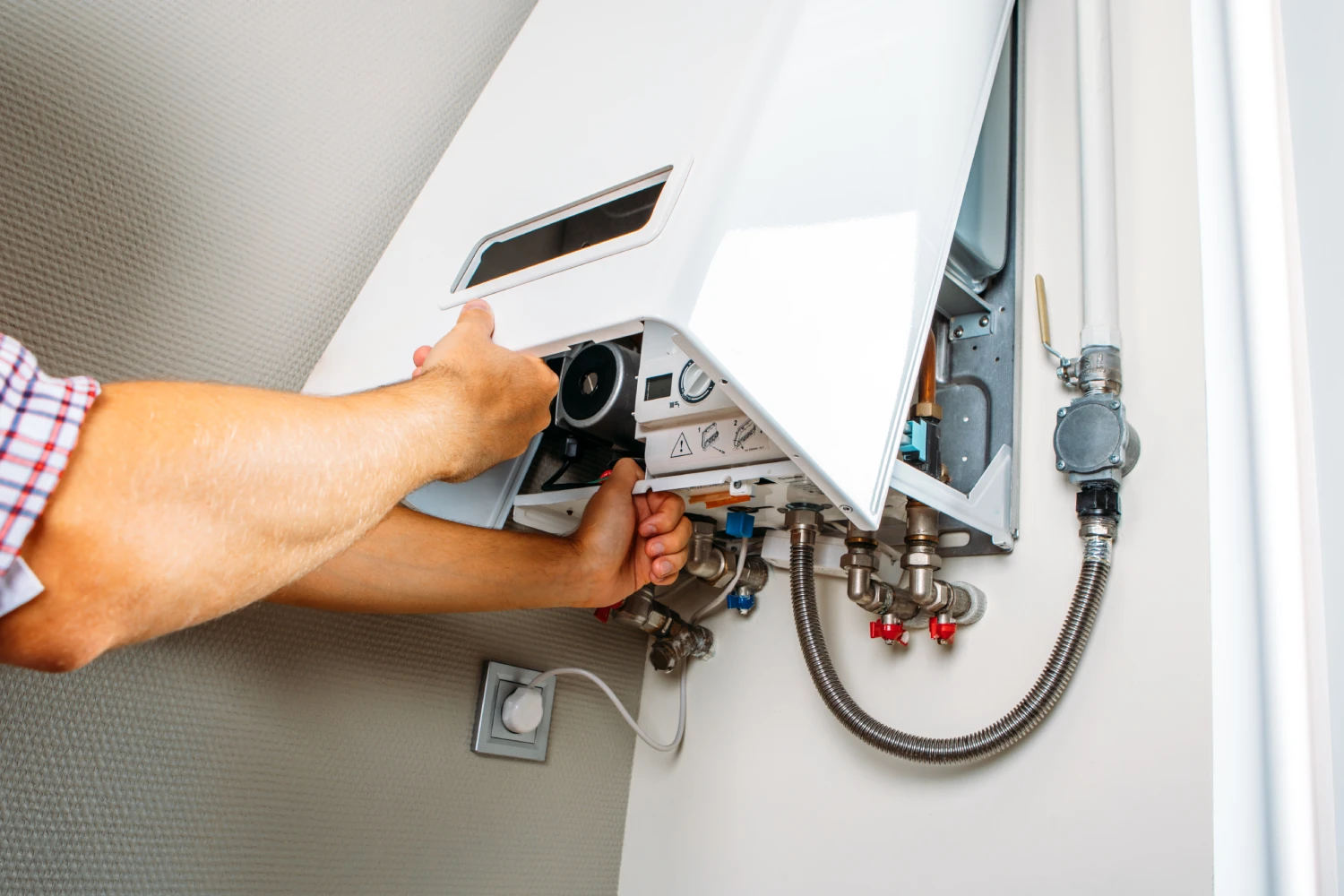
During a survey, an installer may look at:
- The approximate size of accessible heating pipes
- The condition of visible pipework
- The route between the boiler and heating system
- Radiator connections
- Existing valves and fittings
- Signs of corrosion, leakage or previous alterations
- The arrangement of the primary heating circuit
- The gas pipe supplying the appliance
- Accessibility around the boiler and relevant pipework
Not every pipe needs replacing simply because it is old. The important point is that the installer identifies potential restrictions and explains whether they are relevant to the proposed installation.
A site survey should therefore lead to a recommendation based on the property rather than simply a boiler model selected from a standard list.
Why does existing pipework matter when choosing a new boiler?
A boiler does not operate independently from the rest of the heating system.
When a boiler heats water, that water needs to circulate through the system and return to the appliance. If parts of the system restrict circulation, the boiler and heating controls may not be able to deliver the results expected from the new installation.
This becomes particularly relevant when replacing an older boiler with a modern appliance.
Older systems may have evolved over many years. A property might have had radiators added, rooms altered or sections of pipework changed without the entire heating system being redesigned. The visible boiler may be relatively easy to replace, while the underlying system is considerably more complicated.
This does not automatically mean extensive pipework replacement is necessary.
Instead, it means the installer should establish whether the existing arrangement is suitable and identify any work that may be required.
The best boiler installation companies should be able to explain this in straightforward terms. Homeowners should not have to guess why a particular boiler has been recommended or whether additional pipework work could be required.
What should be checked during a pre-installation survey?
A useful survey should produce enough information for the installer to develop a realistic installation plan.
Different properties present different challenges. A detached house, a compact terrace and an older property with several previous heating alterations may all require different approaches.
Here are some of the main areas that can be assessed:
|
Survey area |
What the installer is looking for |
Why it matters |
|
Boiler position |
Available space and access |
Determines installation requirements |
|
Heating pipework |
Size, route and condition |
Helps assess circulation and compatibility |
|
Gas supply |
Existing pipe route and capacity |
Important for safe appliance operation |
|
Radiators |
Size, condition and distribution |
Helps assess heating demand |
|
System type |
Combi, system or regular boiler arrangement |
Influences suitable replacement options |
|
Flue route |
Existing position and termination |
May affect boiler positioning |
|
Controls |
Existing thermostat and control arrangement |
Helps determine upgrade requirements |
|
Access |
Working space and pipe access |
Can affect labour and installation complexity |
A detailed survey does not necessarily make an installation expensive. It simply gives the installer a clearer understanding of what is involved.
This is especially useful when comparing quotations because two prices can otherwise appear similar while covering different amounts of work.
How can you tell whether a boiler quote is based on a proper survey?
One useful test is to look at how specifically the quotation describes the proposed work.
A generic quote might simply state the boiler model, installation price and warranty. That may be enough for a very straightforward replacement, but it does not tell you whether the existing heating system has actually been assessed.
A more detailed quotation may refer to:
- The existing boiler location
- Required pipework alterations
- Gas supply requirements
- Flue arrangements
- Heating controls
- Removal and disposal of the old appliance
- Commissioning
- Additional components
- Any exclusions or provisional work
This level of detail gives homeowners something meaningful to compare.
It also helps prevent misunderstandings later. If the quotation clearly states that certain pipework alterations are included, there is less uncertainty about whether additional labour could be required.
The best boiler installation companies should be comfortable explaining what their quotation includes and why particular work has been recommended.
That does not mean the most detailed quote is automatically the cheapest or most appropriate. It means the homeowner has better information with which to compare the proposals.
Should installers discuss pipework limitations before the installation?
Yes. If the existing pipework could affect the proposed installation, it should be discussed before work begins.
The conversation does not need to be overly technical.
For example, an installer might explain that a section of older pipework is restricted, that access is available to replace it, or that a particular alteration would improve the heating circuit.
The homeowner can then make an informed decision about the proposed work.
This is preferable to discovering a potential issue after the new boiler has already been installed.
A good survey should also distinguish between necessary work and improvements that are optional. Not every older component requires replacement simply because a new boiler is being fitted.
That distinction is important when comparing boiler installation companies because quotations can vary according to how much work each installer believes is appropriate.
Ask questions such as:
- Has the existing heating pipework been assessed?
- Are any pipework alterations expected?
- Is the gas supply suitable for the proposed boiler?
- Are the existing controls being retained or replaced?
- Does the quoted price include all planned alterations?
- Are there any potential additional costs?
- Which parts of the existing system are being retained?
Clear answers make it easier to understand what you are actually paying for.
Can two boiler quotes look similar but cover different work?
Absolutely.
Imagine two homeowners receive quotations for what appears to be the same type of boiler installation.
Installer A provides a boiler, standard controls and installation for a stated price.
Installer B provides a similar boiler but also includes alterations to accessible heating pipework, updated controls and additional installation materials.
The second quotation may be higher, but the two proposals are not necessarily like-for-like.
This is why comparing only the headline figure can be misleading.
A fair comparison should consider:
- Boiler specification
- Boiler output
- Controls
- Pipework alterations
- Flue requirements
- Installation labour
- System preparation
- Removal of the existing appliance
- Commissioning
- Warranty terms
- Any stated exclusions
It is also worth checking whether the installer has made assumptions about the existing system.
If a quote is based on the assumption that existing pipework can remain unchanged, while another installer has identified an alteration that they consider necessary, the price difference needs to be understood before a decision is made.
Let’s get started, Which fuel powers your boiler?
Mains Gas
LPG
It just takes 60 Seconds
And then you can book a free consultation
What questions should you ask before choosing an installer?
The initial conversation can reveal a great deal about how thoroughly an installation has been considered.
Rather than asking only, “How much is the boiler?”, ask about the complete installation.
Useful questions include:
Has the property been surveyed?
If an installer is quoting remotely or from very limited information, ask whether the final price is subject to a site survey.
Have you checked the existing pipework?
This can help establish whether the quotation has considered the wider heating system.
Will any pipework need changing?
If the answer is yes, ask which sections and why.
Is the quoted price fixed for the stated scope?
Make sure you understand whether additional work could change the final price.
What is included with the boiler?
Ask about controls, flue components, system preparation and commissioning.
What happens if an issue is found during installation?
A professional installer should be able to explain how unexpected problems are handled before work starts.
These questions are useful regardless of which company you contact.
Why can a proper survey change the recommended boiler?
Boiler selection is not simply about choosing the most powerful appliance available.
The property’s heating and hot water requirements, available space, existing system and installation constraints all need to be considered.
For example, a homeowner may initially expect a particular type or output of boiler, but an assessment could identify another option that better suits the property.
Pipework can form part of that assessment.
If an installer identifies a flow restriction or unsuitable section of pipework, they can factor this into the installation plan rather than treating the boiler as an isolated component.
This is one reason a proper survey is valuable. It gives the installer an opportunity to understand the complete system before work begins.
How should you compare boiler installation companies fairly?
Start by putting every quotation into the same framework.
Instead of comparing only the total price, write down the details of each proposal. This makes differences easier to identify.
| Comparison point | Quote A | Quote B |
|---|---|---|
| Boiler model | ||
| Boiler output | ||
| Controls included | ||
| Pipework alterations | ||
| Gas supply work | ||
| Flue work | ||
| Removal of old boiler | ||
| Commissioning | ||
| Warranty | ||
| Additional costs explained |
This approach can expose important differences that are hidden by a single headline figure.
When looking at the best boiler installation companies, the useful question is not simply which company gives the lowest initial price. It is whether the quotation clearly reflects the property, the proposed boiler and the work required to install it properly.
A transparent quotation gives you more information to work with.
For homeowners considering an installation in Warrington, you can also review related guidance on boiler installation and existing microbore pipework and how older pipework can affect new boiler installation costs.
Conclusion: Why the Installation Survey Matters
A new boiler should be considered as part of the wider heating system rather than as a standalone appliance.
Existing pipework, gas supply, controls, radiator arrangements and access can all influence how an installation needs to be planned. That is why checking the system before recommending a boiler is an important part of the process.
When comparing installers, look for clear explanations rather than focusing solely on the headline price. Ask whether the existing pipework has been assessed, whether alterations are expected and exactly what the quotation includes.
A professional approach should give you a clearer understanding of the work before installation begins.
If you are planning a new boiler installation, UK Gas Group can assess the existing system and explain the proposed work before proceeding. You can also explore the [boiler installation service] or read our related guide on [new boiler costs and older pipework].
Related articles



Let’s get started, Which fuel powers your boiler?
Mains Gas
LPG
At a glance
Introduction
Choosing a new boiler is often presented as a straightforward decision. Look at the available models, compare prices, check the warranty and arrange the installation.
In reality, the boiler itself is only one part of a heating system. The condition, layout and size of the existing pipework can influence how well the new appliance performs. Older properties may have smaller heating pipes, restricted sections, awkward routing or pipework that was originally designed around a different type of system.
This is why the quality of the installation survey matters.
When comparing the best boiler installation companies, homeowners should look beyond the boiler model and headline price. A thorough installer should understand the existing heating system before deciding what equipment is appropriate.
For a homeowner in Warrington, that can mean the difference between a genuinely suitable installation and a quotation that looks attractive but leaves important work unclear.
If you are considering replacing an older boiler, it is worth understanding what a proper assessment should include before comparing quotes.
What should a boiler installation company inspect before recommending a boiler?
A proper pre-installation assessment should look at more than where the existing boiler is located.
The installer should consider the property’s heating requirements, the existing system, the boiler position, hot water requirements, flue arrangements, gas supply and the condition of accessible pipework.
Pipework deserves particular attention because restrictions can affect the movement of heated water around the property. A modern boiler may be capable of delivering efficient heating, but the wider system still needs to circulate water effectively.
During a survey, an installer may look at:
- The approximate size of accessible heating pipes
- The condition of visible pipework
- The route between the boiler and heating system
- Radiator connections
- Existing valves and fittings
- Signs of corrosion, leakage or previous alterations
- The arrangement of the primary heating circuit
- The gas pipe supplying the appliance
- Accessibility around the boiler and relevant pipework
Not every pipe needs replacing simply because it is old. The important point is that the installer identifies potential restrictions and explains whether they are relevant to the proposed installation.
A site survey should therefore lead to a recommendation based on the property rather than simply a boiler model selected from a standard list.
Why does existing pipework matter when choosing a new boiler?
A boiler does not operate independently from the rest of the heating system.
When a boiler heats water, that water needs to circulate through the system and return to the appliance. If parts of the system restrict circulation, the boiler and heating controls may not be able to deliver the results expected from the new installation.
This becomes particularly relevant when replacing an older boiler with a modern appliance.
Older systems may have evolved over many years. A property might have had radiators added, rooms altered or sections of pipework changed without the entire heating system being redesigned. The visible boiler may be relatively easy to replace, while the underlying system is considerably more complicated.
This does not automatically mean extensive pipework replacement is necessary.
Instead, it means the installer should establish whether the existing arrangement is suitable and identify any work that may be required.
The best boiler installation companies should be able to explain this in straightforward terms. Homeowners should not have to guess why a particular boiler has been recommended or whether additional pipework work could be required.
What should be checked during a pre-installation survey?
A useful survey should produce enough information for the installer to develop a realistic installation plan.
Different properties present different challenges. A detached house, a compact terrace and an older property with several previous heating alterations may all require different approaches.
Here are some of the main areas that can be assessed:
|
Survey area |
What the installer is looking for |
Why it matters |
|
Boiler position |
Available space and access |
Determines installation requirements |
|
Heating pipework |
Size, route and condition |
Helps assess circulation and compatibility |
|
Gas supply |
Existing pipe route and capacity |
Important for safe appliance operation |
|
Radiators |
Size, condition and distribution |
Helps assess heating demand |
|
System type |
Combi, system or regular boiler arrangement |
Influences suitable replacement options |
|
Flue route |
Existing position and termination |
May affect boiler positioning |
|
Controls |
Existing thermostat and control arrangement |
Helps determine upgrade requirements |
|
Access |
Working space and pipe access |
Can affect labour and installation complexity |
A detailed survey does not necessarily make an installation expensive. It simply gives the installer a clearer understanding of what is involved.
This is especially useful when comparing quotations because two prices can otherwise appear similar while covering different amounts of work.
How can you tell whether a boiler quote is based on a proper survey?
One useful test is to look at how specifically the quotation describes the proposed work.
A generic quote might simply state the boiler model, installation price and warranty. That may be enough for a very straightforward replacement, but it does not tell you whether the existing heating system has actually been assessed.
A more detailed quotation may refer to:
- The existing boiler location
- Required pipework alterations
- Gas supply requirements
- Flue arrangements
- Heating controls
- Removal and disposal of the old appliance
- Commissioning
- Additional components
- Any exclusions or provisional work
This level of detail gives homeowners something meaningful to compare.
It also helps prevent misunderstandings later. If the quotation clearly states that certain pipework alterations are included, there is less uncertainty about whether additional labour could be required.
The best boiler installation companies should be comfortable explaining what their quotation includes and why particular work has been recommended.
That does not mean the most detailed quote is automatically the cheapest or most appropriate. It means the homeowner has better information with which to compare the proposals.
Should installers discuss pipework limitations before the installation?
Yes. If the existing pipework could affect the proposed installation, it should be discussed before work begins.
The conversation does not need to be overly technical.
For example, an installer might explain that a section of older pipework is restricted, that access is available to replace it, or that a particular alteration would improve the heating circuit.
The homeowner can then make an informed decision about the proposed work.
This is preferable to discovering a potential issue after the new boiler has already been installed.
A good survey should also distinguish between necessary work and improvements that are optional. Not every older component requires replacement simply because a new boiler is being fitted.
That distinction is important when comparing boiler installation companies because quotations can vary according to how much work each installer believes is appropriate.
Ask questions such as:
- Has the existing heating pipework been assessed?
- Are any pipework alterations expected?
- Is the gas supply suitable for the proposed boiler?
- Are the existing controls being retained or replaced?
- Does the quoted price include all planned alterations?
- Are there any potential additional costs?
- Which parts of the existing system are being retained?
Clear answers make it easier to understand what you are actually paying for.
Can two boiler quotes look similar but cover different work?
Absolutely.
Imagine two homeowners receive quotations for what appears to be the same type of boiler installation.
Installer A provides a boiler, standard controls and installation for a stated price.
Installer B provides a similar boiler but also includes alterations to accessible heating pipework, updated controls and additional installation materials.
The second quotation may be higher, but the two proposals are not necessarily like-for-like.
This is why comparing only the headline figure can be misleading.
A fair comparison should consider:
- Boiler specification
- Boiler output
- Controls
- Pipework alterations
- Flue requirements
- Installation labour
- System preparation
- Removal of the existing appliance
- Commissioning
- Warranty terms
- Any stated exclusions
It is also worth checking whether the installer has made assumptions about the existing system.
If a quote is based on the assumption that existing pipework can remain unchanged, while another installer has identified an alteration that they consider necessary, the price difference needs to be understood before a decision is made.
Let’s get started, Which fuel powers your boiler?
Mains Gas
LPG
It just takes 60 Seconds
And then you can book a free consultation
What questions should you ask before choosing an installer?
The initial conversation can reveal a great deal about how thoroughly an installation has been considered.
Rather than asking only, “How much is the boiler?”, ask about the complete installation.
Useful questions include:
Has the property been surveyed?
If an installer is quoting remotely or from very limited information, ask whether the final price is subject to a site survey.
Have you checked the existing pipework?
This can help establish whether the quotation has considered the wider heating system.
Will any pipework need changing?
If the answer is yes, ask which sections and why.
Is the quoted price fixed for the stated scope?
Make sure you understand whether additional work could change the final price.
What is included with the boiler?
Ask about controls, flue components, system preparation and commissioning.
What happens if an issue is found during installation?
A professional installer should be able to explain how unexpected problems are handled before work starts.
These questions are useful regardless of which company you contact.
Why can a proper survey change the recommended boiler?
Boiler selection is not simply about choosing the most powerful appliance available.
The property’s heating and hot water requirements, available space, existing system and installation constraints all need to be considered.
For example, a homeowner may initially expect a particular type or output of boiler, but an assessment could identify another option that better suits the property.
Pipework can form part of that assessment.
If an installer identifies a flow restriction or unsuitable section of pipework, they can factor this into the installation plan rather than treating the boiler as an isolated component.
This is one reason a proper survey is valuable. It gives the installer an opportunity to understand the complete system before work begins.
How should you compare boiler installation companies fairly?
Start by putting every quotation into the same framework.
Instead of comparing only the total price, write down the details of each proposal. This makes differences easier to identify.
| Comparison point | Quote A | Quote B |
|---|---|---|
| Boiler model | ||
| Boiler output | ||
| Controls included | ||
| Pipework alterations | ||
| Gas supply work | ||
| Flue work | ||
| Removal of old boiler | ||
| Commissioning | ||
| Warranty | ||
| Additional costs explained |
This approach can expose important differences that are hidden by a single headline figure.
When looking at the best boiler installation companies, the useful question is not simply which company gives the lowest initial price. It is whether the quotation clearly reflects the property, the proposed boiler and the work required to install it properly.
A transparent quotation gives you more information to work with.
For homeowners considering an installation in Warrington, you can also review related guidance on boiler installation and existing microbore pipework and how older pipework can affect new boiler installation costs.
Conclusion: Why the Installation Survey Matters
A new boiler should be considered as part of the wider heating system rather than as a standalone appliance.
Existing pipework, gas supply, controls, radiator arrangements and access can all influence how an installation needs to be planned. That is why checking the system before recommending a boiler is an important part of the process.
When comparing installers, look for clear explanations rather than focusing solely on the headline price. Ask whether the existing pipework has been assessed, whether alterations are expected and exactly what the quotation includes.
A professional approach should give you a clearer understanding of the work before installation begins.
If you are planning a new boiler installation, UK Gas Group can assess the existing system and explain the proposed work before proceeding. You can also explore the [boiler installation service] or read our related guide on [new boiler costs and older pipework].