
Combi Boiler Replacement Altrincham: When Old Pipework Changes the Scope of the Job
Does your existing pipework meet the requirements of a new combi boiler? In older Altrincham properties, pipe condition and layout can affect how straightforward a replacement turns out to be.

Why you can trust our content
We understand that the boiler industry can be confusing, with plenty of outdated or misleading information. That’s why we rely only on trusted, proven sources to guide our advice and installations:


At a glance
Introduction
Replacing a combi boiler can seem like a straightforward job, particularly when the new appliance is going into the same position as the old one. However, keeping the same boiler location does not always mean the installation will follow exactly the same arrangement.
Older properties can have heating systems that have been modified over many years. Pipework may have been extended, rerouted or connected to different radiators as the property changed. Some sections may also be smaller, harder to access or in poorer condition than the visible parts of the system suggest.
This is where the scope of a boiler replacement can change.
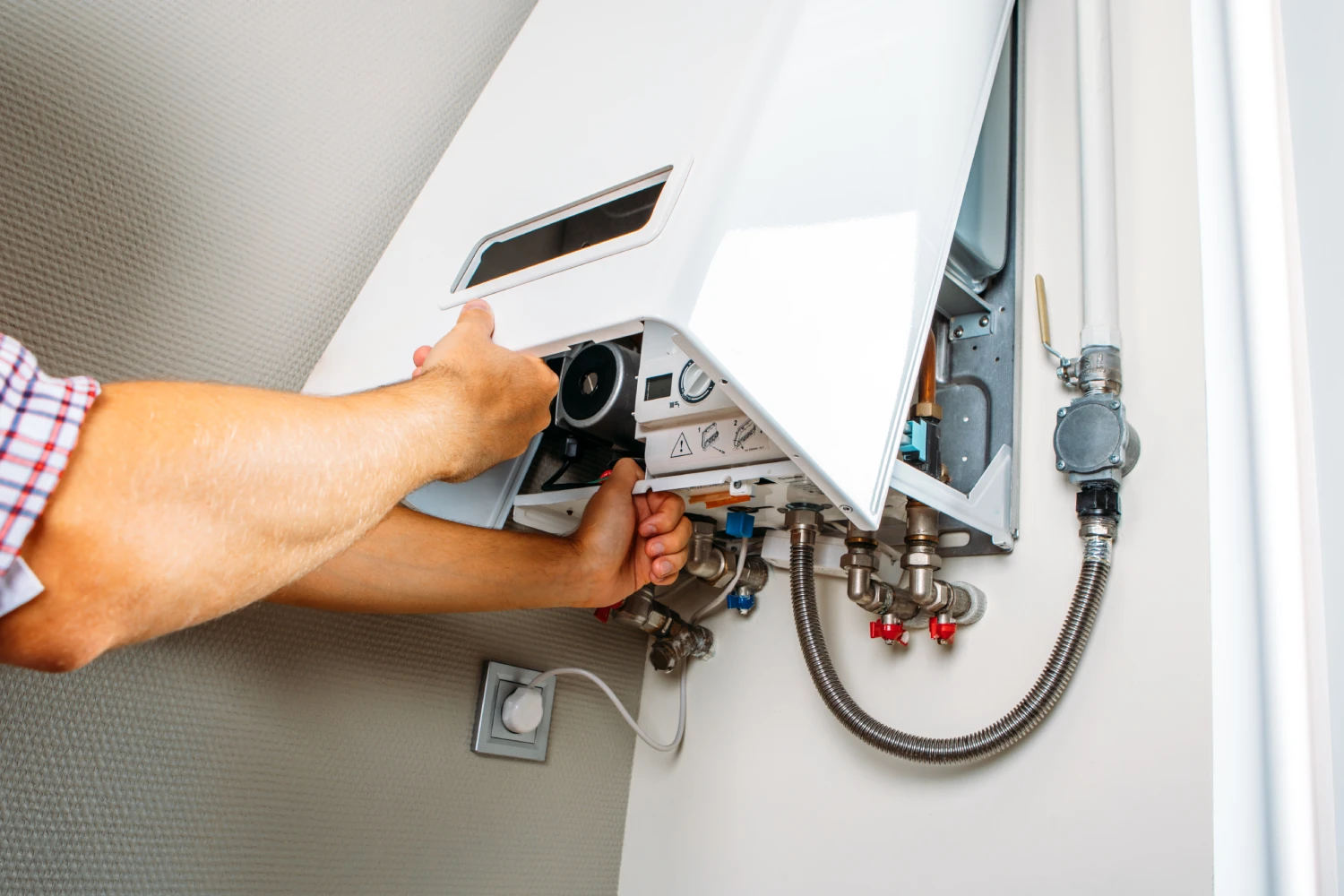
A combi boiler replacement altrincham project may involve more than removing the existing appliance and connecting a new one. The installer may need to assess heating pipework, gas supply, controls, connections and the condition of the existing system before confirming exactly what work is required.
Understanding these factors can help homeowners prepare for the installation and make sense of different quotations.
Can old pipework affect a combi boiler replacement?
Yes. Existing pipework can influence how a replacement boiler is connected and how the heating system performs.
That does not mean older pipework automatically needs to be replaced. Instead, the installer should consider whether the existing arrangement is suitable for the proposed appliance and whether any sections could restrict circulation or create installation difficulties.
Older heating systems can contain:
- Smaller-diameter heating pipes
- Multiple pipework alterations
- Older valves and fittings
- Corroded or damaged sections
- Long pipe runs
- Difficult-to-access connections
- Pipework installed around previous boiler positions
A modern replacement may also have different connection requirements from the appliance it is replacing.
This means an installer should assess the existing system rather than assuming that everything can simply be connected in exactly the same way.
For homeowners planning a replacement, this assessment can make the final scope of work much clearer.
What changes the scope of a combi boiler replacement?
The scope of an installation is essentially the work needed to complete the replacement safely and appropriately.
A straightforward replacement might involve removing the existing boiler, making the necessary connections, installing the new flue and controls, and commissioning the appliance.
Other properties may require additional work.
Potential factors include:
Boiler position
Keeping the boiler in the same location can simplify some aspects of the installation, but it does not guarantee that every existing connection will be suitable.
Heating pipework
The size, condition and layout of accessible pipework may influence what alterations are required.
Gas supply
The existing gas supply needs to be assessed for suitability for the replacement appliance.
Controls
Older thermostats and control arrangements may not be suitable for the new system or may be upgraded as part of the installation.
Flue arrangement
The existing flue route may need to be altered depending on the new appliance and installation requirements.
Access
Restricted access can make apparently simple pipework alterations more time-consuming.
The important point is that the replacement scope should be based on the actual property rather than a standard assumption.
Let’s get started, Which fuel powers your boiler?
Mains Gas
LPG
It just takes 60 Seconds
And then you can book a free consultation
How can you tell if your existing pipework is likely to need attention?
There is no single age at which heating pipework automatically becomes unsuitable.
Instead, an installer can look for physical and functional indicators.
Visible signs may include:
- Corrosion around joints
- Green or discoloured copper
- Leaking valves or connections
- Poorly supported pipework
- Previous repairs
- Unusual pipe routing
- Sections that have been altered over time
Performance can also provide useful clues.
If some radiators have consistently struggled to heat, the system has required frequent balancing or there are known circulation problems, these issues are worth mentioning during the survey.
They do not prove that the pipework must be replaced, but they can help the installer understand how the system behaves.
For a combi boiler replacement altrincham, this information can be useful when deciding whether the existing system can be retained, modified or requires more extensive work.
What pipework checks should be made before replacing a combi boiler?
A pre-installation assessment should consider both the heating system and the gas supply.
The exact checks will depend on the property, but the installer may consider:
| Area | What may be assessed | Potential impact |
| Heating pipework | Size, condition and routing | May influence circulation and connections |
| Gas pipework | Existing route and suitability | May require alteration |
| Boiler connections | Current arrangement | May need adapting |
| Radiator circuit | Layout and condition | Helps assess system performance |
| Valves | Condition and operation | May require replacement |
| Controls | Thermostat and programmer | May be retained or upgraded |
| Flue | Position and route | May affect installation |
| Access | Space around pipework | Can influence labour |
The purpose of these checks is not to create unnecessary work.
It is to establish what is actually required before the installation begins.
A good survey should distinguish between work that is necessary for the replacement and optional improvements that a homeowner may choose to consider.
Does replacing the boiler mean all the pipework has to be replaced?
No.
This is an important distinction.
A heating system can contain older pipework while still being suitable for continued use. The installer should assess the relevant sections rather than treating the age of the pipework as automatic evidence that a complete replacement is needed.
In some cases, only a short section needs changing to accommodate the new boiler.
In others, a restriction may be identified further along the system that requires attention.
There may also be situations where no significant pipework alteration is required.
The appropriate solution depends on the property.
If an installer recommends pipework changes, ask them to explain what they are changing and why. Understanding the reason behind the recommendation makes it easier to assess the proposed work.
How can old pipework affect the boiler replacement cost?
The boiler replacement cost is influenced by more than the appliance itself.
Additional labour and materials can be required if the existing system needs modification.
For example, costs can be affected by:
- The amount of pipework that needs altering
- The location of the pipework
- Access beneath floors or behind cupboards
- Replacement valves and fittings
- Gas supply alterations
- Flue modifications
- Control upgrades
- System preparation
- Removal and disposal of the old appliance
Accessibility is particularly important.
A pipe that is exposed and easy to reach may be relatively straightforward to modify. The same pipe hidden behind a finished surface can involve additional labour and potentially making good after the work.
This is why it is useful to obtain a quotation based on an actual assessment rather than relying entirely on a generic replacement price.
Can pipework problems be discovered during a boiler replacement?
Yes.
Not every section of a heating system will necessarily be visible during an initial survey.
Some pipework may run beneath floors, behind boxing or inside cupboards. Once the existing boiler is removed, an installer may also have a clearer view of connections that were previously difficult to inspect.
If an unexpected issue is discovered, the installer should explain what has been found and why it matters.
Useful questions include:
- What has been discovered?
- Is the issue necessary to resolve before commissioning?
- Can the existing component safely remain?
- What work is being proposed?
- What additional materials are required?
- Will the additional work change the price?
This conversation should happen before additional chargeable work is carried out wherever practical.
Clear communication is especially important where the original quotation was based on assumptions about concealed pipework.
When does a replacement become more involved than expected?
A replacement can become more complex when several factors occur together.
For example, an older property may have a boiler located in a restricted cupboard, smaller heating pipework, an older control arrangement and a gas supply that needs assessment.
None of these factors automatically means a major installation.
However, each one can add something to the planning process.
The installer may need to decide:
- Which existing components can remain.
- Which connections need adapting.
- Whether any pipework needs replacing.
- Whether controls should be upgraded.
- Whether the flue arrangement remains suitable.
- How the installation can be completed with minimal disruption.
This is why a site survey is valuable.
It allows the installer to build a realistic picture of the work instead of relying on the assumption that every replacement is identical.
How should you compare combi boiler replacement quotations?
When comparing quotations, avoid looking at the boiler model and total price alone.
Create a simple list of what each installer has included.
|
Item |
Quotation A |
Quotation B |
|
Boiler model |
||
|
Boiler output |
||
|
Controls |
||
|
Heating pipework alterations |
||
|
Gas pipework work |
||
|
Flue arrangements |
||
|
System preparation |
||
|
Removal of old boiler |
||
|
Commissioning |
||
|
Warranty |
||
|
Additional work exclusions |
This can reveal why two apparently similar replacement prices differ.
One installer may have included pipework alterations that another has excluded. Another may include upgraded controls or additional system preparation.
The boiler replacement cost should therefore be considered alongside the full specification.
A lower price may not be directly comparable if it covers a smaller scope of work.
What should you ask before booking a combi boiler replacement?
Before agreeing to the work, ask the installer to explain the complete plan.
Useful questions include:
Will the new boiler remain in the same position?
If so, ask whether the existing connections can be reused.
Has the heating pipework been assessed?
This helps identify potential flow or connection issues.
Are any alterations expected?
Ask whether these are already included in the quotation.
Has the gas supply been checked?
The installer should assess the existing arrangement for the proposed appliance.
Are new controls included?
Find out what controls are being supplied and whether your existing ones will remain.
What happens if concealed pipework is unsuitable?
Knowing the procedure for unexpected work can help avoid confusion.
Is the quoted price based on a site survey?
If not, ask whether the price could change following a full assessment.
These questions are particularly useful when several installers are being considered.
Why does planning matter during a combi boiler replacement?
Good preparation can reduce uncertainty.
A homeowner who understands the existing system, the proposed boiler and the expected scope of work is in a stronger position to make decisions about the installation.
Pipework is one part of that picture.
It should not automatically be treated as a problem, but neither should it be ignored when an older heating system is being upgraded.
A replacement boiler can often work effectively with existing pipework, provided the system is assessed and any necessary alterations are properly addressed.
For homeowners in Altrincham, understanding this before work begins can make the replacement process easier to plan and budget for.
You can also read our related guide on new boiler installation and existing pipework or boiler installation costs and older systems for more information.
Conclusion: Check the Whole System, Not Just the Boiler
A combi boiler replacement is an opportunity to assess the wider heating system and make sure the proposed appliance is suitable for the property.
Old pipework does not automatically mean that extensive alterations are required. However, its size, condition, routing and accessibility can affect the scope of the job.
A detailed survey allows the installer to identify known issues, explain any proposed alterations and provide a quotation that more accurately reflects the work involved.
If you are planning a combi boiler replacement altrincham, UK Gas Group can assess your existing heating system and explain the work required before the replacement begins.
For more information, explore the [boiler replacement service] or contact UK Gas Group to discuss your existing boiler, pipework and installation requirements.
Related articles




Let’s get started, Which fuel powers your boiler?
Mains Gas
LPG
At a glance
Introduction
Replacing a combi boiler can seem like a straightforward job, particularly when the new appliance is going into the same position as the old one. However, keeping the same boiler location does not always mean the installation will follow exactly the same arrangement.
Older properties can have heating systems that have been modified over many years. Pipework may have been extended, rerouted or connected to different radiators as the property changed. Some sections may also be smaller, harder to access or in poorer condition than the visible parts of the system suggest.
This is where the scope of a boiler replacement can change.
A combi boiler replacement altrincham project may involve more than removing the existing appliance and connecting a new one. The installer may need to assess heating pipework, gas supply, controls, connections and the condition of the existing system before confirming exactly what work is required.
Understanding these factors can help homeowners prepare for the installation and make sense of different quotations.
Can old pipework affect a combi boiler replacement?
Yes. Existing pipework can influence how a replacement boiler is connected and how the heating system performs.
That does not mean older pipework automatically needs to be replaced. Instead, the installer should consider whether the existing arrangement is suitable for the proposed appliance and whether any sections could restrict circulation or create installation difficulties.
Older heating systems can contain:
- Smaller-diameter heating pipes
- Multiple pipework alterations
- Older valves and fittings
- Corroded or damaged sections
- Long pipe runs
- Difficult-to-access connections
- Pipework installed around previous boiler positions
A modern replacement may also have different connection requirements from the appliance it is replacing.
This means an installer should assess the existing system rather than assuming that everything can simply be connected in exactly the same way.
For homeowners planning a replacement, this assessment can make the final scope of work much clearer.
What changes the scope of a combi boiler replacement?
The scope of an installation is essentially the work needed to complete the replacement safely and appropriately.
A straightforward replacement might involve removing the existing boiler, making the necessary connections, installing the new flue and controls, and commissioning the appliance.
Other properties may require additional work.
Potential factors include:
Boiler position
Keeping the boiler in the same location can simplify some aspects of the installation, but it does not guarantee that every existing connection will be suitable.
Heating pipework
The size, condition and layout of accessible pipework may influence what alterations are required.
Gas supply
The existing gas supply needs to be assessed for suitability for the replacement appliance.
Controls
Older thermostats and control arrangements may not be suitable for the new system or may be upgraded as part of the installation.
Flue arrangement
The existing flue route may need to be altered depending on the new appliance and installation requirements.
Access
Restricted access can make apparently simple pipework alterations more time-consuming.
The important point is that the replacement scope should be based on the actual property rather than a standard assumption.
Let’s get started, Which fuel powers your boiler?
Mains Gas
LPG
It just takes 60 Seconds
And then you can book a free consultation
How can you tell if your existing pipework is likely to need attention?
There is no single age at which heating pipework automatically becomes unsuitable.
Instead, an installer can look for physical and functional indicators.
Visible signs may include:
- Corrosion around joints
- Green or discoloured copper
- Leaking valves or connections
- Poorly supported pipework
- Previous repairs
- Unusual pipe routing
- Sections that have been altered over time
Performance can also provide useful clues.
If some radiators have consistently struggled to heat, the system has required frequent balancing or there are known circulation problems, these issues are worth mentioning during the survey.
They do not prove that the pipework must be replaced, but they can help the installer understand how the system behaves.
For a combi boiler replacement altrincham, this information can be useful when deciding whether the existing system can be retained, modified or requires more extensive work.
What pipework checks should be made before replacing a combi boiler?
A pre-installation assessment should consider both the heating system and the gas supply.
The exact checks will depend on the property, but the installer may consider:
| Area | What may be assessed | Potential impact |
| Heating pipework | Size, condition and routing | May influence circulation and connections |
| Gas pipework | Existing route and suitability | May require alteration |
| Boiler connections | Current arrangement | May need adapting |
| Radiator circuit | Layout and condition | Helps assess system performance |
| Valves | Condition and operation | May require replacement |
| Controls | Thermostat and programmer | May be retained or upgraded |
| Flue | Position and route | May affect installation |
| Access | Space around pipework | Can influence labour |
The purpose of these checks is not to create unnecessary work.
It is to establish what is actually required before the installation begins.
A good survey should distinguish between work that is necessary for the replacement and optional improvements that a homeowner may choose to consider.
Does replacing the boiler mean all the pipework has to be replaced?
No.
This is an important distinction.
A heating system can contain older pipework while still being suitable for continued use. The installer should assess the relevant sections rather than treating the age of the pipework as automatic evidence that a complete replacement is needed.
In some cases, only a short section needs changing to accommodate the new boiler.
In others, a restriction may be identified further along the system that requires attention.
There may also be situations where no significant pipework alteration is required.
The appropriate solution depends on the property.
If an installer recommends pipework changes, ask them to explain what they are changing and why. Understanding the reason behind the recommendation makes it easier to assess the proposed work.
How can old pipework affect the boiler replacement cost?
The boiler replacement cost is influenced by more than the appliance itself.
Additional labour and materials can be required if the existing system needs modification.
For example, costs can be affected by:
- The amount of pipework that needs altering
- The location of the pipework
- Access beneath floors or behind cupboards
- Replacement valves and fittings
- Gas supply alterations
- Flue modifications
- Control upgrades
- System preparation
- Removal and disposal of the old appliance
Accessibility is particularly important.
A pipe that is exposed and easy to reach may be relatively straightforward to modify. The same pipe hidden behind a finished surface can involve additional labour and potentially making good after the work.
This is why it is useful to obtain a quotation based on an actual assessment rather than relying entirely on a generic replacement price.
Can pipework problems be discovered during a boiler replacement?
Yes.
Not every section of a heating system will necessarily be visible during an initial survey.
Some pipework may run beneath floors, behind boxing or inside cupboards. Once the existing boiler is removed, an installer may also have a clearer view of connections that were previously difficult to inspect.
If an unexpected issue is discovered, the installer should explain what has been found and why it matters.
Useful questions include:
- What has been discovered?
- Is the issue necessary to resolve before commissioning?
- Can the existing component safely remain?
- What work is being proposed?
- What additional materials are required?
- Will the additional work change the price?
This conversation should happen before additional chargeable work is carried out wherever practical.
Clear communication is especially important where the original quotation was based on assumptions about concealed pipework.
When does a replacement become more involved than expected?
A replacement can become more complex when several factors occur together.
For example, an older property may have a boiler located in a restricted cupboard, smaller heating pipework, an older control arrangement and a gas supply that needs assessment.
None of these factors automatically means a major installation.
However, each one can add something to the planning process.
The installer may need to decide:
- Which existing components can remain.
- Which connections need adapting.
- Whether any pipework needs replacing.
- Whether controls should be upgraded.
- Whether the flue arrangement remains suitable.
- How the installation can be completed with minimal disruption.
This is why a site survey is valuable.
It allows the installer to build a realistic picture of the work instead of relying on the assumption that every replacement is identical.
How should you compare combi boiler replacement quotations?
When comparing quotations, avoid looking at the boiler model and total price alone.
Create a simple list of what each installer has included.
|
Item |
Quotation A |
Quotation B |
|
Boiler model |
||
|
Boiler output |
||
|
Controls |
||
|
Heating pipework alterations |
||
|
Gas pipework work |
||
|
Flue arrangements |
||
|
System preparation |
||
|
Removal of old boiler |
||
|
Commissioning |
||
|
Warranty |
||
|
Additional work exclusions |
This can reveal why two apparently similar replacement prices differ.
One installer may have included pipework alterations that another has excluded. Another may include upgraded controls or additional system preparation.
The boiler replacement cost should therefore be considered alongside the full specification.
A lower price may not be directly comparable if it covers a smaller scope of work.
What should you ask before booking a combi boiler replacement?
Before agreeing to the work, ask the installer to explain the complete plan.
Useful questions include:
Will the new boiler remain in the same position?
If so, ask whether the existing connections can be reused.
Has the heating pipework been assessed?
This helps identify potential flow or connection issues.
Are any alterations expected?
Ask whether these are already included in the quotation.
Has the gas supply been checked?
The installer should assess the existing arrangement for the proposed appliance.
Are new controls included?
Find out what controls are being supplied and whether your existing ones will remain.
What happens if concealed pipework is unsuitable?
Knowing the procedure for unexpected work can help avoid confusion.
Is the quoted price based on a site survey?
If not, ask whether the price could change following a full assessment.
These questions are particularly useful when several installers are being considered.
Why does planning matter during a combi boiler replacement?
Good preparation can reduce uncertainty.
A homeowner who understands the existing system, the proposed boiler and the expected scope of work is in a stronger position to make decisions about the installation.
Pipework is one part of that picture.
It should not automatically be treated as a problem, but neither should it be ignored when an older heating system is being upgraded.
A replacement boiler can often work effectively with existing pipework, provided the system is assessed and any necessary alterations are properly addressed.
For homeowners in Altrincham, understanding this before work begins can make the replacement process easier to plan and budget for.
You can also read our related guide on new boiler installation and existing pipework or boiler installation costs and older systems for more information.
Conclusion: Check the Whole System, Not Just the Boiler
A combi boiler replacement is an opportunity to assess the wider heating system and make sure the proposed appliance is suitable for the property.
Old pipework does not automatically mean that extensive alterations are required. However, its size, condition, routing and accessibility can affect the scope of the job.
A detailed survey allows the installer to identify known issues, explain any proposed alterations and provide a quotation that more accurately reflects the work involved.
If you are planning a combi boiler replacement altrincham, UK Gas Group can assess your existing heating system and explain the work required before the replacement begins.
For more information, explore the [boiler replacement service] or contact UK Gas Group to discuss your existing boiler, pipework and installation requirements.