
Split System Air Conditioning in Altrincham: How Does It Work and Who Is It For?
Learn how split system air conditioning works, its benefits, installation requirements, running costs and whether it suits your Altrincham home.

Why you can trust our content
We understand that the boiler industry can be confusing, with plenty of outdated or misleading information. That’s why we rely only on trusted, proven sources to guide our advice and installations:


At a glance
Introduction
A room that becomes uncomfortably warm during summer can affect sleep, concentration and everyday comfort. Opening windows may help in some circumstances, but it does not always provide enough cooling, particularly when outdoor temperatures remain high or a room receives direct sunlight throughout the day.
A split system air conditioner offers a more controlled way to manage indoor temperatures. It uses separate indoor and outdoor components to transfer heat out of a room, and many models can also provide heating when the weather turns colder.
For homeowners considering air conditioning in Altrincham, understanding how these systems work, what installation involves and how much space they can condition makes it easier to decide whether this type of equipment is suitable.
What is a split system air conditioner?
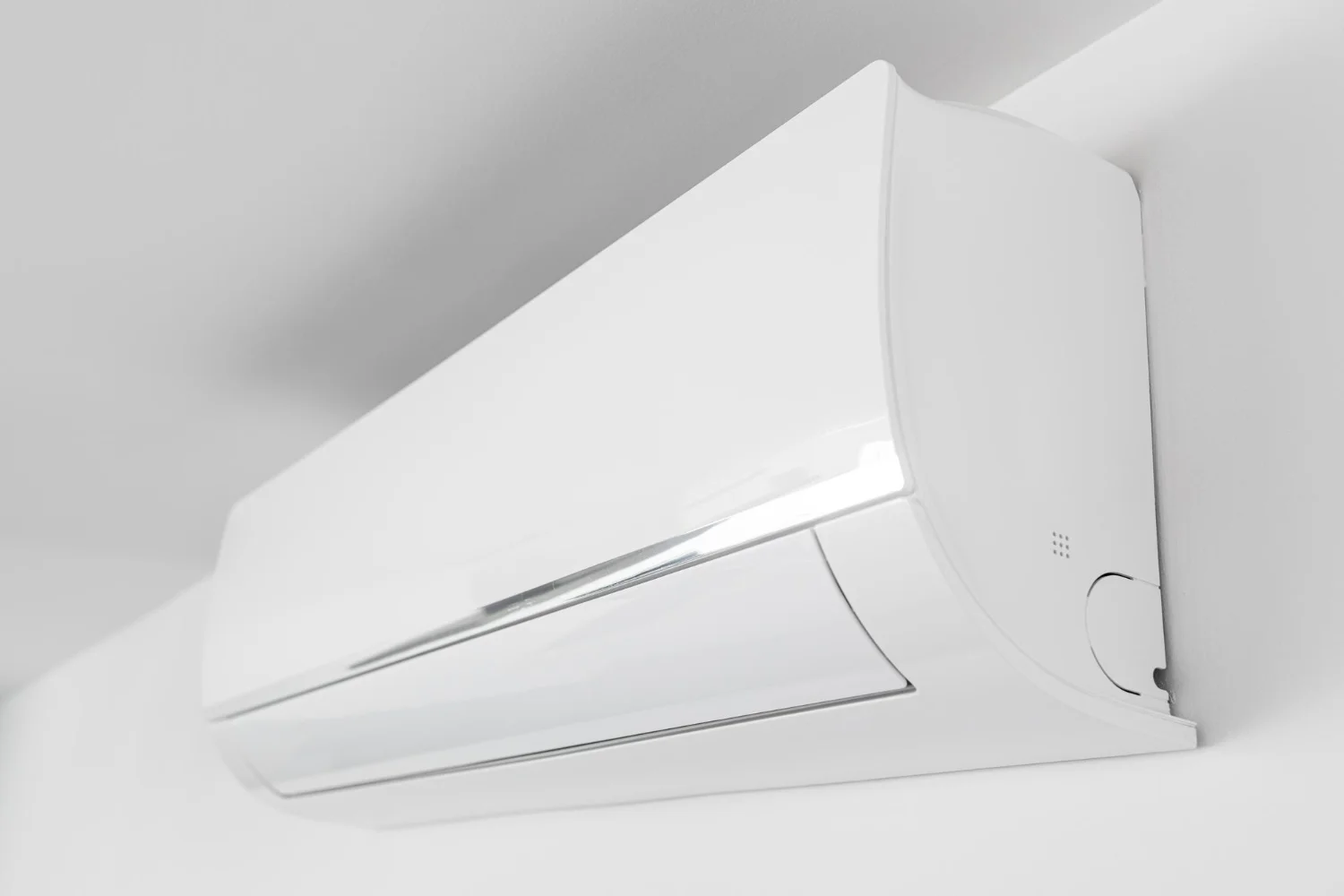
A split system air conditioner consists of two main components: an indoor unit and an outdoor unit. They work together to remove heat from the indoor space and release it outside.
The indoor unit usually contains a fan, heat exchanger and filters. The outdoor unit houses components such as the compressor and another heat exchanger. Refrigerant circulates between the two units through connecting pipework.
During cooling, the system absorbs heat from the room and transfers it outdoors. The indoor fan then circulates the cooled air back into the space. This process continues until the system reaches the temperature setting or adjusts its output to match the room’s cooling demand.
Unlike a portable air conditioner, a fixed split system does not normally need a large exhaust hose running through an open window. Instead, its indoor and outdoor components are connected through a planned route in the wall.
How does split system air conditioning work?
The process relies on the movement of heat rather than simply producing cold air. Refrigerant changes pressure and state as it passes through the system, allowing it to absorb heat indoors and release it outdoors.
The main stages are:
- Heat absorption: Refrigerant in the indoor heat exchanger absorbs heat from the room air.
- Compression: The compressor raises the refrigerant’s pressure and temperature.
- Heat release: The outdoor heat exchanger releases heat into the outside air.
- Pressure reduction: The refrigerant passes through an expansion device, reducing its pressure before returning indoors.
- Continuous operation: The cycle repeats as required to maintain the desired indoor conditions.
The system also filters circulating air, although standard air conditioning filters should not be assumed to remove every airborne pollutant. Their effectiveness depends on the filter design and maintenance.
Many fixed systems use inverter technology to adjust compressor speed according to demand. Instead of repeatedly operating at full output, an inverter system can vary its capacity to help maintain a steadier temperature. Actual efficiency depends on the model, installation quality, outdoor conditions and how the equipment is used.
Who is a split system best suited to?
A split system is often suitable for a specific room where consistent temperature control is important. It can be a practical option for homes that do not need a full ducted installation.
Typical applications include:
- Bedrooms: Cooling can make a room more comfortable during warm nights.
- Home offices: Temperature control may improve comfort during long periods at a desk.
- Living rooms: A suitably sized unit can help manage heat from sunlight, occupants and electrical equipment.
- Garden rooms: A system may provide year-round comfort where the building and equipment are suitable.
- Open-plan spaces: A carefully selected unit can condition a larger area, subject to its layout and heat load.
The most appropriate choice depends on the room’s dimensions, insulation, windows and how it connects to other spaces. A unit fitted in one bedroom will not necessarily cool an entire floor effectively because walls, closed doors and corridors restrict airflow.
If several rooms need independent temperature control, a multi-split system or another whole-home arrangement may be more suitable.
What are the main benefits of a split system?
Fixed split systems offer several practical advantages, although the benefits depend on choosing suitable equipment and having it installed correctly.
| Benefit | What it means for homeowners |
|---|---|
| Controlled cooling | Helps maintain a more comfortable temperature in the selected room |
| Heating capability | Many reverse-cycle models can provide heat during colder weather |
| Independent settings | The indoor unit can be controlled according to the needs of its room |
| No large window exhaust hose | Indoor and outdoor units connect through planned pipework |
| Adjustable output | Inverter models can vary their output to match demand |
| Programmable controls | Timers and other controls can help manage operating periods |
Another advantage is that a fixed system can be designed around the room rather than moved between spaces. Once installed, it can provide regular cooling without requiring the repeated setup associated with portable equipment.
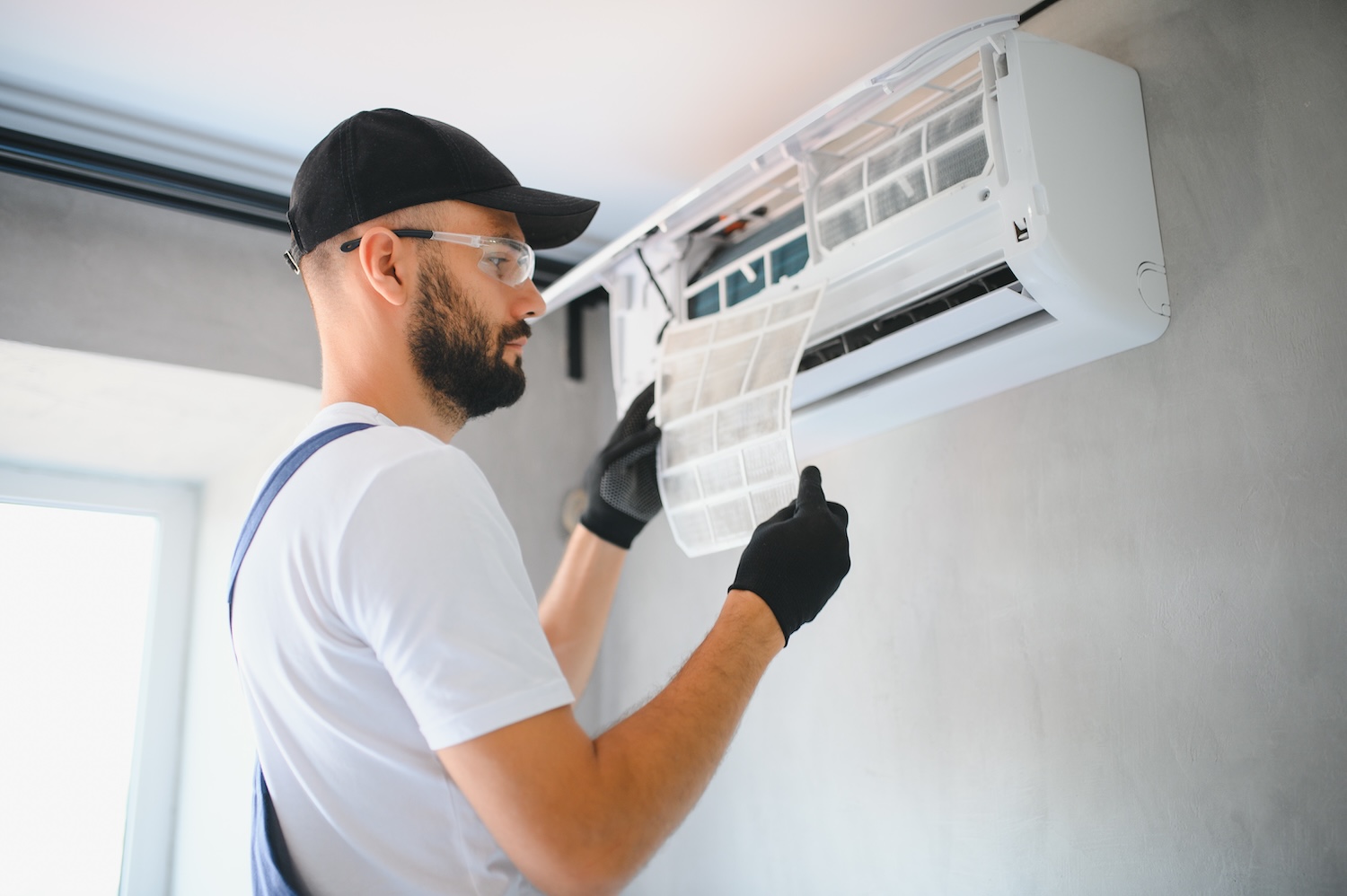
However, a split system is not completely maintenance-free. Filters need attention, drainage must remain clear, and appropriate professional maintenance can help identify developing problems.
What should you consider before installation?
The location of both units affects the appearance, operation and maintenance of the system. These decisions should be made before installation begins.
The indoor unit needs a suitable mounting surface, sufficient clearance and a position that allows air to circulate without creating an uncomfortable direct draught. It should also remain accessible for filter cleaning and servicing.
The outdoor unit requires adequate airflow and a secure base or bracket. Its position should take account of noise, weather exposure, neighbouring properties and access for future maintenance.
The installation also requires a route for refrigerant pipework, electrical connections and condensate drainage. A hole through an external wall is commonly needed, and the route should be planned to minimise unnecessary bends and visible trunking.
Before confirming a booking, ask the installer:
- Where will the indoor and outdoor units be positioned?
- How will pipes and cables be routed?
- Where will condensate water discharge?
- Does the existing electrical installation meet the equipment’s requirements?
- Are any permissions or property restrictions relevant?
- What preparation should be completed before installation day?
If you are considering a fixed system, contact UK Gas Group Ltd to discuss the layout of your property and the installation options available.
How much does split system air conditioning cost?
The total price depends on the equipment, the installation conditions and the amount of work required. There is no single figure that applies to every home.
When researching split system air conditioning cost in Altrincham, compare the complete installed price rather than the advertised cost of the indoor unit alone.
| Cost factor | Why it affects the price |
|---|---|
| Cooling capacity | Equipment requirements vary according to the room’s heat load |
| Make and model | Features, performance and warranty terms differ |
| Pipework length | Longer routes can require more materials and labour |
| Electrical work | Changes to the existing supply may add to the cost |
| Outdoor unit position | Difficult access or specialist mounting can increase installation time |
| Finishing requirements | Trunking, wall repairs or additional building work may affect the final price |
| Number of systems | Installing several units increases equipment and labour requirements |
A straightforward single-room installation will generally involve less work than a multi-room arrangement with complicated pipework or additional electrical requirements.
Request a written quotation that identifies the equipment model, included materials, labour, commissioning, VAT and any exclusions. If the installation requires extra work, ask how variations will be agreed and priced.
Speak to UK Gas Group Ltd about your room size, intended use and installation requirements so that the proposed equipment and quotation can be assessed against your needs.
Can a split system provide heating as well as cooling?
Yes, many split systems are designed to provide both functions through reverse-cycle heat pump technology. In heating mode, the system transfers heat from the outdoor air into the home rather than removing indoor heat.
This can make a fixed air conditioner useful throughout the year, particularly in rooms that need additional heating during colder periods.
Before relying on a system for heating, check its rated heating capacity, operating temperature range and expected efficiency. Performance can change as outdoor temperatures fall, and the heating requirement of the room must be considered.
A single-room unit may work well as supplementary heating without being suitable as the only heat source for an entire property. An installer can help determine whether the equipment is appropriate for the intended role.
What maintenance does a split system need?
Routine care helps the equipment maintain airflow and operate as intended. The homeowner can usually handle basic filter checks, while technical inspections should be arranged when required.
Useful maintenance steps include:
- Cleaning or checking accessible filters according to the manufacturer’s instructions.
- Keeping the outdoor unit free from leaves and other obstructions.
- Checking for unusual noises, reduced airflow or water leaks.
- Using the recommended operating settings rather than making extreme adjustments unnecessarily.
- Arranging professional attention if the system stops cooling or heating properly.
Do not attempt to open the refrigerant circuit or carry out electrical repairs yourself. Refrigerant handling and technical work must be completed by appropriately qualified personnel.
If water appears around the indoor unit or the equipment begins making unfamiliar noises, stop using it if necessary for safety and arrange an inspection.
How do you choose a suitable installation company?
The quality of the installation can influence system performance, reliability and future maintenance. It is worth checking an installer’s approach before making a decision.
Look for relevant qualifications, appropriate refrigerant-handling certification where required, suitable insurance and clear written quotations. Ask how the installer determines cooling capacity, what commissioning checks are included and which warranties apply to the equipment and workmanship.
A reliable quotation should describe the proposed system and explain any assumptions about pipework, electrical work and access. It should also clarify whether commissioning, operating instructions and the handover are included.
Avoid comparing companies solely on price. A lower quotation may exclude important work or specify equipment that is not suitable for your room.
For homeowners seeking an air con split system installer in Altrincham, clear communication and a properly assessed installation plan are useful signs of a professional approach.
Related articles




At a glance
Introduction
A room that becomes uncomfortably warm during summer can affect sleep, concentration and everyday comfort. Opening windows may help in some circumstances, but it does not always provide enough cooling, particularly when outdoor temperatures remain high or a room receives direct sunlight throughout the day.
A split system air conditioner offers a more controlled way to manage indoor temperatures. It uses separate indoor and outdoor components to transfer heat out of a room, and many models can also provide heating when the weather turns colder.
For homeowners considering air conditioning in Altrincham, understanding how these systems work, what installation involves and how much space they can condition makes it easier to decide whether this type of equipment is suitable.
What is a split system air conditioner?
A split system air conditioner consists of two main components: an indoor unit and an outdoor unit. They work together to remove heat from the indoor space and release it outside.
The indoor unit usually contains a fan, heat exchanger and filters. The outdoor unit houses components such as the compressor and another heat exchanger. Refrigerant circulates between the two units through connecting pipework.
During cooling, the system absorbs heat from the room and transfers it outdoors. The indoor fan then circulates the cooled air back into the space. This process continues until the system reaches the temperature setting or adjusts its output to match the room’s cooling demand.
Unlike a portable air conditioner, a fixed split system does not normally need a large exhaust hose running through an open window. Instead, its indoor and outdoor components are connected through a planned route in the wall.
How does split system air conditioning work?
The process relies on the movement of heat rather than simply producing cold air. Refrigerant changes pressure and state as it passes through the system, allowing it to absorb heat indoors and release it outdoors.
The main stages are:
- Heat absorption: Refrigerant in the indoor heat exchanger absorbs heat from the room air.
- Compression: The compressor raises the refrigerant’s pressure and temperature.
- Heat release: The outdoor heat exchanger releases heat into the outside air.
- Pressure reduction: The refrigerant passes through an expansion device, reducing its pressure before returning indoors.
- Continuous operation: The cycle repeats as required to maintain the desired indoor conditions.
The system also filters circulating air, although standard air conditioning filters should not be assumed to remove every airborne pollutant. Their effectiveness depends on the filter design and maintenance.
Many fixed systems use inverter technology to adjust compressor speed according to demand. Instead of repeatedly operating at full output, an inverter system can vary its capacity to help maintain a steadier temperature. Actual efficiency depends on the model, installation quality, outdoor conditions and how the equipment is used.
Who is a split system best suited to?
A split system is often suitable for a specific room where consistent temperature control is important. It can be a practical option for homes that do not need a full ducted installation.
Typical applications include:
- Bedrooms: Cooling can make a room more comfortable during warm nights.
- Home offices: Temperature control may improve comfort during long periods at a desk.
- Living rooms: A suitably sized unit can help manage heat from sunlight, occupants and electrical equipment.
- Garden rooms: A system may provide year-round comfort where the building and equipment are suitable.
- Open-plan spaces: A carefully selected unit can condition a larger area, subject to its layout and heat load.
The most appropriate choice depends on the room’s dimensions, insulation, windows and how it connects to other spaces. A unit fitted in one bedroom will not necessarily cool an entire floor effectively because walls, closed doors and corridors restrict airflow.
If several rooms need independent temperature control, a multi-split system or another whole-home arrangement may be more suitable.
What are the main benefits of a split system?
Fixed split systems offer several practical advantages, although the benefits depend on choosing suitable equipment and having it installed correctly.
| Benefit | What it means for homeowners |
|---|---|
| Controlled cooling | Helps maintain a more comfortable temperature in the selected room |
| Heating capability | Many reverse-cycle models can provide heat during colder weather |
| Independent settings | The indoor unit can be controlled according to the needs of its room |
| No large window exhaust hose | Indoor and outdoor units connect through planned pipework |
| Adjustable output | Inverter models can vary their output to match demand |
| Programmable controls | Timers and other controls can help manage operating periods |
Another advantage is that a fixed system can be designed around the room rather than moved between spaces. Once installed, it can provide regular cooling without requiring the repeated setup associated with portable equipment.
However, a split system is not completely maintenance-free. Filters need attention, drainage must remain clear, and appropriate professional maintenance can help identify developing problems.
What should you consider before installation?
The location of both units affects the appearance, operation and maintenance of the system. These decisions should be made before installation begins.
The indoor unit needs a suitable mounting surface, sufficient clearance and a position that allows air to circulate without creating an uncomfortable direct draught. It should also remain accessible for filter cleaning and servicing.
The outdoor unit requires adequate airflow and a secure base or bracket. Its position should take account of noise, weather exposure, neighbouring properties and access for future maintenance.
The installation also requires a route for refrigerant pipework, electrical connections and condensate drainage. A hole through an external wall is commonly needed, and the route should be planned to minimise unnecessary bends and visible trunking.
Before confirming a booking, ask the installer:
- Where will the indoor and outdoor units be positioned?
- How will pipes and cables be routed?
- Where will condensate water discharge?
- Does the existing electrical installation meet the equipment’s requirements?
- Are any permissions or property restrictions relevant?
- What preparation should be completed before installation day?
If you are considering a fixed system, contact UK Gas Group Ltd to discuss the layout of your property and the installation options available.
How much does split system air conditioning cost?
The total price depends on the equipment, the installation conditions and the amount of work required. There is no single figure that applies to every home.
When researching split system air conditioning cost in Altrincham, compare the complete installed price rather than the advertised cost of the indoor unit alone.
| Cost factor | Why it affects the price |
|---|---|
| Cooling capacity | Equipment requirements vary according to the room’s heat load |
| Make and model | Features, performance and warranty terms differ |
| Pipework length | Longer routes can require more materials and labour |
| Electrical work | Changes to the existing supply may add to the cost |
| Outdoor unit position | Difficult access or specialist mounting can increase installation time |
| Finishing requirements | Trunking, wall repairs or additional building work may affect the final price |
| Number of systems | Installing several units increases equipment and labour requirements |
A straightforward single-room installation will generally involve less work than a multi-room arrangement with complicated pipework or additional electrical requirements.
Request a written quotation that identifies the equipment model, included materials, labour, commissioning, VAT and any exclusions. If the installation requires extra work, ask how variations will be agreed and priced.
Speak to UK Gas Group Ltd about your room size, intended use and installation requirements so that the proposed equipment and quotation can be assessed against your needs.
Can a split system provide heating as well as cooling?
Yes, many split systems are designed to provide both functions through reverse-cycle heat pump technology. In heating mode, the system transfers heat from the outdoor air into the home rather than removing indoor heat.
This can make a fixed air conditioner useful throughout the year, particularly in rooms that need additional heating during colder periods.
Before relying on a system for heating, check its rated heating capacity, operating temperature range and expected efficiency. Performance can change as outdoor temperatures fall, and the heating requirement of the room must be considered.
A single-room unit may work well as supplementary heating without being suitable as the only heat source for an entire property. An installer can help determine whether the equipment is appropriate for the intended role.
What maintenance does a split system need?
Routine care helps the equipment maintain airflow and operate as intended. The homeowner can usually handle basic filter checks, while technical inspections should be arranged when required.
Useful maintenance steps include:
- Cleaning or checking accessible filters according to the manufacturer’s instructions.
- Keeping the outdoor unit free from leaves and other obstructions.
- Checking for unusual noises, reduced airflow or water leaks.
- Using the recommended operating settings rather than making extreme adjustments unnecessarily.
- Arranging professional attention if the system stops cooling or heating properly.
Do not attempt to open the refrigerant circuit or carry out electrical repairs yourself. Refrigerant handling and technical work must be completed by appropriately qualified personnel.
If water appears around the indoor unit or the equipment begins making unfamiliar noises, stop using it if necessary for safety and arrange an inspection.
How do you choose a suitable installation company?
The quality of the installation can influence system performance, reliability and future maintenance. It is worth checking an installer’s approach before making a decision.
Look for relevant qualifications, appropriate refrigerant-handling certification where required, suitable insurance and clear written quotations. Ask how the installer determines cooling capacity, what commissioning checks are included and which warranties apply to the equipment and workmanship.
A reliable quotation should describe the proposed system and explain any assumptions about pipework, electrical work and access. It should also clarify whether commissioning, operating instructions and the handover are included.
Avoid comparing companies solely on price. A lower quotation may exclude important work or specify equipment that is not suitable for your room.
For homeowners seeking an air con split system installer in Altrincham, clear communication and a properly assessed installation plan are useful signs of a professional approach.