
Wall Mounted Air Conditioning Units: Pros, Cons and Typical Pricing
Compare wall mounted air conditioning units, including their benefits, limitations, installation requirements and the factors that influence total cost.

Why you can trust our content
We understand that the boiler industry can be confusing, with plenty of outdated or misleading information. That’s why we rely only on trusted, proven sources to guide our advice and installations:

At a glance
Introduction
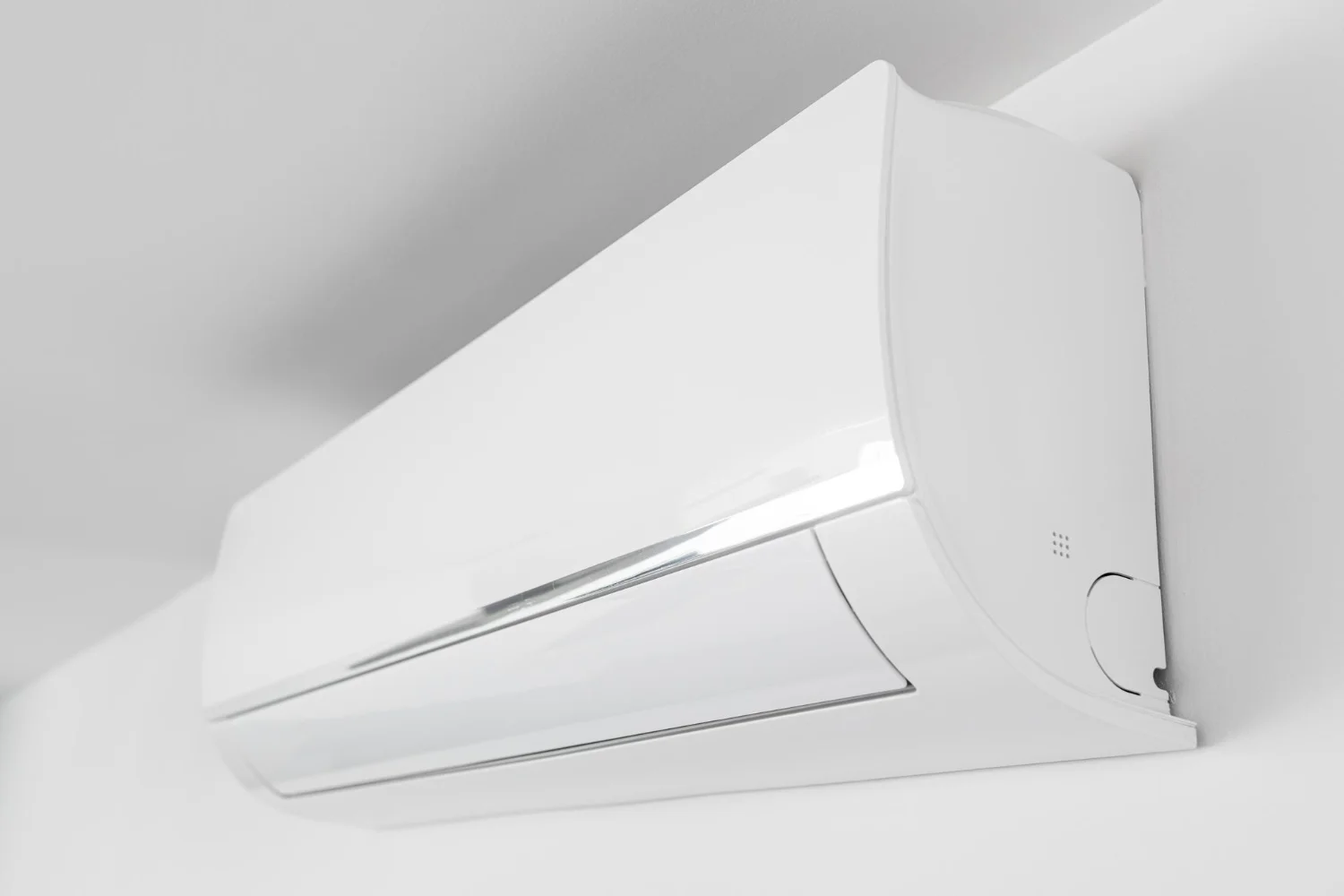
Wall-mounted air conditioning is a popular option for homeowners who want to improve comfort in a bedroom, living room or home office without installing ductwork throughout the property. The indoor unit is fitted high on a wall and connected to an outdoor unit, creating a permanent system that can provide controlled cooling and, on many models, heating as well.
However, not every unit is suitable for every room. Cooling capacity, noise levels, installation access and the position of the outdoor equipment can all influence the result. Understanding these factors before buying helps you compare options based on practical value rather than appearance or advertised price alone.
This guide explains how wall-mounted systems work, their main advantages and disadvantages, and what to consider when budgeting for professional installation.
How does a wall-mounted air conditioning unit work?
A wall-mounted air conditioning unit uses an indoor component to circulate and condition room air, alongside an outdoor component that transfers heat to or from the outside environment.
During cooling, the system absorbs heat from indoors and releases it outside through a refrigerant circuit. A fan then circulates cooled air around the room. Many modern models use inverter technology to adjust their output in response to changing demand.
Some units also provide reverse-cycle heating. This allows the same equipment to transfer heat indoors during colder weather, provided the model is designed for that purpose.
A typical installation includes:
- An indoor unit mounted on a suitable wall.
- An outdoor unit installed on a stable base or appropriate bracket.
- Refrigerant pipework connecting the two components.
- Electrical connections and system controls.
- Condensate drainage to remove water produced during cooling.
The system needs appropriate installation and commissioning to operate as intended. Unit placement, pipework routing and drainage should all be planned before work begins.
What are the main benefits of wall-mounted systems?
Wall-mounted systems can provide a straightforward way to condition an individual room without the space requirements of a ducted installation.
Their main advantages include:
- Targeted cooling: A correctly sized system can manage the temperature of a selected room.
- Heating and cooling options: Many models provide both functions, giving the equipment more year-round use.
- No extensive duct network: The indoor and outdoor units connect through relatively limited pipework.
- Convenient controls: Remote controls, timers and app-based functions may be available, depending on the model.
- Flexible installation: Units can be fitted in suitable bedrooms, lounges, offices and other regularly occupied spaces.
- Variable output: Inverter models can adjust compressor operation to match demand.
For a household that mainly struggles with one overheated bedroom or a sunny living room, a fixed wall-mounted system may be more practical than conditioning the whole house.
The final result still depends on correct sizing and positioning. A unit that is poorly located or undersized may struggle to maintain comfortable conditions when the room gains substantial heat.
Are there any disadvantages to consider?
Although wall-mounted air conditioning is practical for many homes, it does have limitations. The indoor unit remains visible, and the outdoor component needs a suitable location.
Consider these potential drawbacks before making a decision:
| Consideration | What it means |
|---|---|
| Visible equipment | The indoor unit becomes part of the room’s appearance |
| Limited room coverage | One unit may not cool adjoining rooms effectively |
| Outdoor placement | Space, airflow, noise and maintenance access need consideration |
| Installation work | Wall penetration, pipework and drainage are usually required |
| Regular upkeep | Filters need cleaning and technical maintenance may be necessary |
| Initial investment | The complete installed cost includes more than the equipment alone |
Airflow direction also matters. If the unit blows directly towards a bed, sofa or desk, the cooling may feel uncomfortable even when the room temperature is appropriate.
For properties where several rooms need independent control, multiple wall-mounted units or a multi-split system may be worth considering. Where a concealed finish is the priority, ducted air conditioning could be an alternative if the building has suitable space.
How do you choose the correct size?
Choosing the correct capacity is essential for comfortable and efficient operation. The required output depends on how much heat enters the room and how effectively the building retains a stable temperature.
Floor area provides a useful starting point, but it is not enough on its own. An installer should also consider ceiling height, window size, sunlight, insulation, occupancy and heat from appliances.
For example, a compact bedroom with shaded windows may have different cooling requirements from a similarly sized room with large windows facing the afternoon sun.
An undersized system may struggle during warmer weather. An oversized system can cost more than necessary and may cycle frequently under some operating conditions, affecting comfort and humidity control.
Ask the installer to explain the proposed capacity and why it suits the room. Avoid choosing solely on the basis of a general room-size chart or the lowest advertised price.
What affects the wall mounted aircon price?
The wall mounted aircon price varies according to the equipment selected and the work needed to fit it. A basic equipment price may not include the labour, materials or additional work required to complete the installation.
The following factors commonly influence the total.
| Cost factor | Potential effect on the total price |
|---|---|
| Brand and model | Equipment features, performance and warranty terms vary |
| Cooling capacity | Larger requirements may call for different equipment |
| Installation labour | Time depends on access and the complexity of the work |
| Pipework length | Longer routes can require additional materials and labour |
| Electrical work | Changes to the existing supply may increase costs |
| Outdoor unit mounting | Brackets, bases or difficult access may affect the price |
| Condensate drainage | The drainage route can influence installation complexity |
| Finishing work | Trunking or additional building repairs may be required |
A straightforward single-room installation generally involves less work than fitting equipment in a difficult location or routing pipework over a longer distance.
When comparing prices, request a written quotation that specifies the equipment model, labour, included materials, electrical arrangements, commissioning and any exclusions. Confirm whether VAT is included and how unexpected work will be priced.
If you are planning a new system, contact UK Gas Group Ltd to discuss your room requirements and the installation work that may be needed.
Can a wall-mounted unit heat your home as well?
Yes, many modern wall-mounted air conditioners provide heating through reverse-cycle heat pump technology. In heating mode, the system transfers heat from outdoor air into the room.
This can be useful during cooler months, especially in a room that is difficult to keep comfortable with the existing heating arrangement. However, suitability depends on the equipment’s heating capacity and the building’s heat loss.
Before relying on the unit for regular heating, check its rated performance, operating temperature range and expected running costs. A single-room installation should not automatically be assumed to meet the heating needs of the entire property.
If heating is a key reason for buying the system, make this clear when requesting a quotation so the equipment can be assessed for both functions.
Where should the indoor and outdoor units be installed?
Positioning affects airflow, noise, appearance and future maintenance. The indoor unit should be mounted securely, with adequate clearance and enough space for air to circulate.
Avoid placing it where the airflow will cause a persistent draught across a bed, sofa or workstation. The unit should also remain accessible for filter cleaning.
The outdoor unit needs a stable base or suitable bracket, sufficient ventilation and access for servicing. Its location should take account of neighbouring properties, bedroom windows and outdoor seating areas.
The installer must also plan the refrigerant pipework, electrical connections and condensate drainage. A suitable drainage arrangement helps prevent water from collecting around the equipment or entering the building.
Speak to UK Gas Group Ltd about suitable unit positions and the practical requirements of your proposed installation before finalising the layout.
What maintenance will a wall-mounted system need?
Regular basic maintenance helps maintain airflow and gives you an opportunity to spot developing problems.
Homeowners can usually check and clean accessible filters according to the manufacturer’s instructions. Filters that become clogged with dust can restrict airflow and affect system performance.
Keep the outdoor unit clear of leaves and other obstructions, provided this can be done safely. Watch for unusual noises, water leaks or a noticeable reduction in cooling or heating performance.
Professional maintenance may include checking the system’s operation, drainage and relevant components. Refrigerant circuit work and electrical repairs should be left to appropriately qualified professionals.
Follow the manufacturer’s maintenance schedule and keep the operating instructions and warranty information available for reference.
Related articles





At a glance
Introduction
Wall-mounted air conditioning is a popular option for homeowners who want to improve comfort in a bedroom, living room or home office without installing ductwork throughout the property. The indoor unit is fitted high on a wall and connected to an outdoor unit, creating a permanent system that can provide controlled cooling and, on many models, heating as well.
However, not every unit is suitable for every room. Cooling capacity, noise levels, installation access and the position of the outdoor equipment can all influence the result. Understanding these factors before buying helps you compare options based on practical value rather than appearance or advertised price alone.
This guide explains how wall-mounted systems work, their main advantages and disadvantages, and what to consider when budgeting for professional installation.
How does a wall-mounted air conditioning unit work?
A wall-mounted air conditioning unit uses an indoor component to circulate and condition room air, alongside an outdoor component that transfers heat to or from the outside environment.
During cooling, the system absorbs heat from indoors and releases it outside through a refrigerant circuit. A fan then circulates cooled air around the room. Many modern models use inverter technology to adjust their output in response to changing demand.
Some units also provide reverse-cycle heating. This allows the same equipment to transfer heat indoors during colder weather, provided the model is designed for that purpose.
A typical installation includes:
- An indoor unit mounted on a suitable wall.
- An outdoor unit installed on a stable base or appropriate bracket.
- Refrigerant pipework connecting the two components.
- Electrical connections and system controls.
- Condensate drainage to remove water produced during cooling.
The system needs appropriate installation and commissioning to operate as intended. Unit placement, pipework routing and drainage should all be planned before work begins.
What are the main benefits of wall-mounted systems?
Wall-mounted systems can provide a straightforward way to condition an individual room without the space requirements of a ducted installation.
Their main advantages include:
- Targeted cooling: A correctly sized system can manage the temperature of a selected room.
- Heating and cooling options: Many models provide both functions, giving the equipment more year-round use.
- No extensive duct network: The indoor and outdoor units connect through relatively limited pipework.
- Convenient controls: Remote controls, timers and app-based functions may be available, depending on the model.
- Flexible installation: Units can be fitted in suitable bedrooms, lounges, offices and other regularly occupied spaces.
- Variable output: Inverter models can adjust compressor operation to match demand.
For a household that mainly struggles with one overheated bedroom or a sunny living room, a fixed wall-mounted system may be more practical than conditioning the whole house.
The final result still depends on correct sizing and positioning. A unit that is poorly located or undersized may struggle to maintain comfortable conditions when the room gains substantial heat.
Are there any disadvantages to consider?
Although wall-mounted air conditioning is practical for many homes, it does have limitations. The indoor unit remains visible, and the outdoor component needs a suitable location.
Consider these potential drawbacks before making a decision:
| Consideration | What it means |
|---|---|
| Visible equipment | The indoor unit becomes part of the room’s appearance |
| Limited room coverage | One unit may not cool adjoining rooms effectively |
| Outdoor placement | Space, airflow, noise and maintenance access need consideration |
| Installation work | Wall penetration, pipework and drainage are usually required |
| Regular upkeep | Filters need cleaning and technical maintenance may be necessary |
| Initial investment | The complete installed cost includes more than the equipment alone |
Airflow direction also matters. If the unit blows directly towards a bed, sofa or desk, the cooling may feel uncomfortable even when the room temperature is appropriate.
For properties where several rooms need independent control, multiple wall-mounted units or a multi-split system may be worth considering. Where a concealed finish is the priority, ducted air conditioning could be an alternative if the building has suitable space.
How do you choose the correct size?
Choosing the correct capacity is essential for comfortable and efficient operation. The required output depends on how much heat enters the room and how effectively the building retains a stable temperature.
Floor area provides a useful starting point, but it is not enough on its own. An installer should also consider ceiling height, window size, sunlight, insulation, occupancy and heat from appliances.
For example, a compact bedroom with shaded windows may have different cooling requirements from a similarly sized room with large windows facing the afternoon sun.
An undersized system may struggle during warmer weather. An oversized system can cost more than necessary and may cycle frequently under some operating conditions, affecting comfort and humidity control.
Ask the installer to explain the proposed capacity and why it suits the room. Avoid choosing solely on the basis of a general room-size chart or the lowest advertised price.
What affects the wall mounted aircon price?
The wall mounted aircon price varies according to the equipment selected and the work needed to fit it. A basic equipment price may not include the labour, materials or additional work required to complete the installation.
The following factors commonly influence the total.
| Cost factor | Potential effect on the total price |
|---|---|
| Brand and model | Equipment features, performance and warranty terms vary |
| Cooling capacity | Larger requirements may call for different equipment |
| Installation labour | Time depends on access and the complexity of the work |
| Pipework length | Longer routes can require additional materials and labour |
| Electrical work | Changes to the existing supply may increase costs |
| Outdoor unit mounting | Brackets, bases or difficult access may affect the price |
| Condensate drainage | The drainage route can influence installation complexity |
| Finishing work | Trunking or additional building repairs may be required |
A straightforward single-room installation generally involves less work than fitting equipment in a difficult location or routing pipework over a longer distance.
When comparing prices, request a written quotation that specifies the equipment model, labour, included materials, electrical arrangements, commissioning and any exclusions. Confirm whether VAT is included and how unexpected work will be priced.
If you are planning a new system, contact UK Gas Group Ltd to discuss your room requirements and the installation work that may be needed.
Can a wall-mounted unit heat your home as well?
Yes, many modern wall-mounted air conditioners provide heating through reverse-cycle heat pump technology. In heating mode, the system transfers heat from outdoor air into the room.
This can be useful during cooler months, especially in a room that is difficult to keep comfortable with the existing heating arrangement. However, suitability depends on the equipment’s heating capacity and the building’s heat loss.
Before relying on the unit for regular heating, check its rated performance, operating temperature range and expected running costs. A single-room installation should not automatically be assumed to meet the heating needs of the entire property.
If heating is a key reason for buying the system, make this clear when requesting a quotation so the equipment can be assessed for both functions.
Where should the indoor and outdoor units be installed?
Positioning affects airflow, noise, appearance and future maintenance. The indoor unit should be mounted securely, with adequate clearance and enough space for air to circulate.
Avoid placing it where the airflow will cause a persistent draught across a bed, sofa or workstation. The unit should also remain accessible for filter cleaning.
The outdoor unit needs a stable base or suitable bracket, sufficient ventilation and access for servicing. Its location should take account of neighbouring properties, bedroom windows and outdoor seating areas.
The installer must also plan the refrigerant pipework, electrical connections and condensate drainage. A suitable drainage arrangement helps prevent water from collecting around the equipment or entering the building.
Speak to UK Gas Group Ltd about suitable unit positions and the practical requirements of your proposed installation before finalising the layout.
What maintenance will a wall-mounted system need?
Regular basic maintenance helps maintain airflow and gives you an opportunity to spot developing problems.
Homeowners can usually check and clean accessible filters according to the manufacturer’s instructions. Filters that become clogged with dust can restrict airflow and affect system performance.
Keep the outdoor unit clear of leaves and other obstructions, provided this can be done safely. Watch for unusual noises, water leaks or a noticeable reduction in cooling or heating performance.
Professional maintenance may include checking the system’s operation, drainage and relevant components. Refrigerant circuit work and electrical repairs should be left to appropriately qualified professionals.
Follow the manufacturer’s maintenance schedule and keep the operating instructions and warranty information available for reference.