
Air Con in Altrincham: What Should You Know Before Choosing a New System?
Planning a new air conditioner in Altrincham? Compare system types, room sizes, running costs, installation needs and key questions before choosing.

Why you can trust our content
We understand that the boiler industry can be confusing, with plenty of outdated or misleading information. That’s why we rely only on trusted, proven sources to guide our advice and installations:


At a glance
Introduction
Choosing air conditioning for your home is easier when you understand what you need the system to achieve. A unit that works well in a small bedroom may not be suitable for a large, open-plan living area, while a system designed for one room might not provide the coverage you want throughout the house.
Before investing in new equipment, consider how you use each room, how much sunlight it receives, whether you need heating as well as cooling, and how much space is available for installation. These practical details can influence comfort, energy consumption and the overall cost of the project.
For homeowners exploring air con in Altrincham, comparing systems carefully before requesting a quotation can help narrow the options and avoid paying for features that do not suit the property.
What should you consider before buying a new air conditioner?
Start by identifying the rooms that become uncomfortable during warmer weather and when the problem is most noticeable. This helps determine whether you need a single-room solution or a system capable of conditioning several areas.
A few questions can help establish your priorities:
- Does one bedroom become too warm at night?
- Does a home office overheat when computers and other equipment are running?
- Does sunlight through large windows cause temperatures to rise during the afternoon?
- Do several rooms need independent temperature control?
- Would you use the system for heating during cooler months?
Your answers will influence the type, size and features of the equipment worth considering.
If you are unsure where to start, contact UK Gas Group Ltd to discuss your property’s layout and the type of temperature control you need.
Which type of air conditioning system suits your home?
Different systems are designed for different buildings and installation requirements. Understanding the main options makes it easier to compare recommendations from installers.
| System type | Main advantages | Points to consider |
|---|---|---|
| Wall-mounted split system | Effective room-by-room cooling and relatively straightforward installation | Requires indoor and outdoor units |
| Multi-split system | Can condition several rooms using a shared outdoor unit | Installation design and pipework can be more involved |
| Ducted air conditioning | Delivers conditioned air through concealed ducts | Requires suitable space for ductwork and outlets |
| Portable air conditioner | Can be moved between suitable rooms | Usually needs an exhaust hose and may be noisier or less efficient than a suitable fixed system |
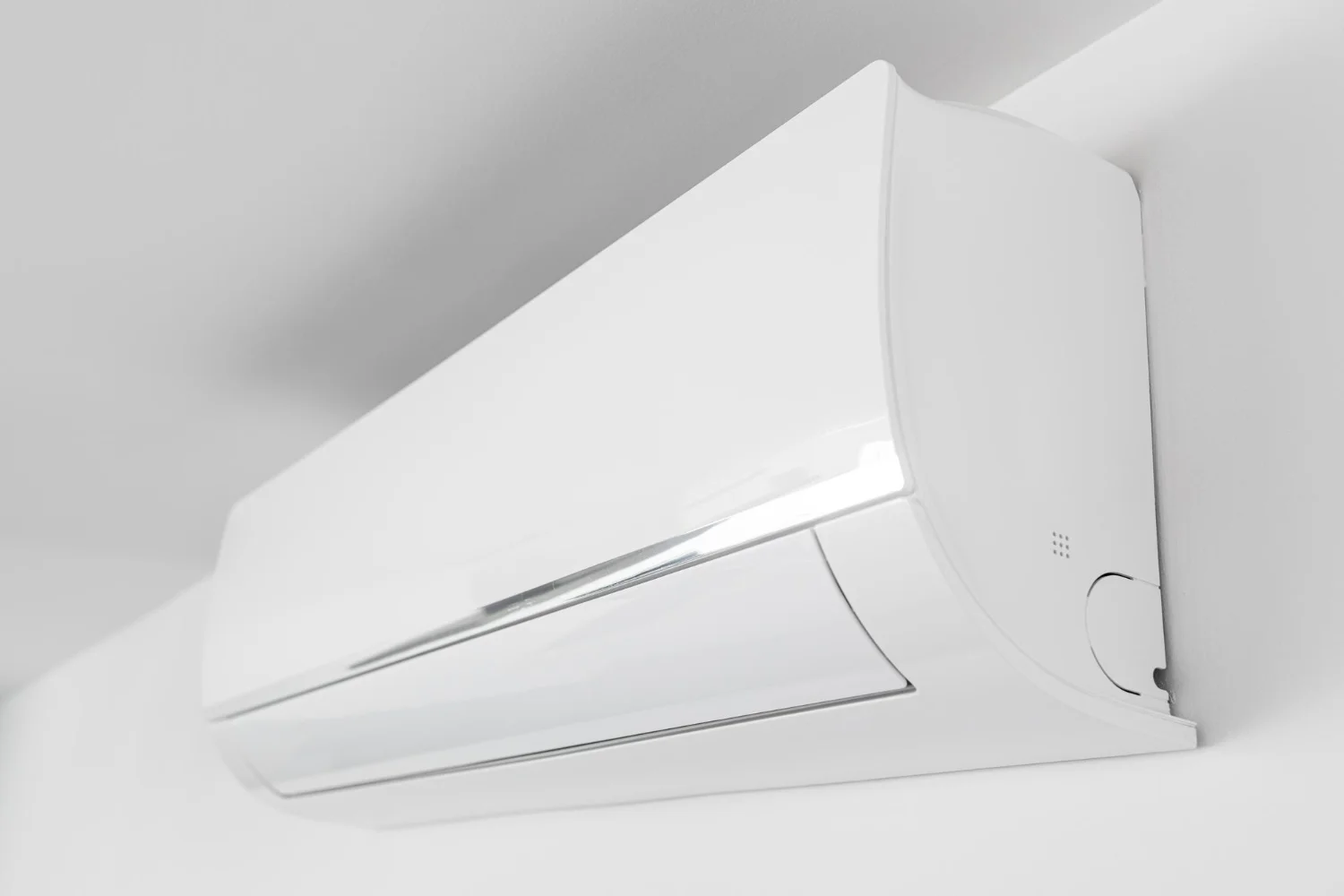
A wall-mounted split system is often considered for an individual bedroom, lounge or office. Where several rooms need cooling, a multi-split arrangement may offer more flexibility. Ducted systems can provide a discreet finish, but the building must have enough suitable space for the ductwork.
Portable units may be useful where permanent installation is not practical. However, their performance depends on the room, exhaust arrangements and the particular model.
There is no single system that suits every home. The right option balances comfort, installation practicality, appearance and budget.
How do you choose the correct cooling capacity?
Cooling capacity is one of the most important factors when selecting a new system. It determines how much heat the equipment can remove under specified operating conditions.
A unit that is too small may struggle to maintain the desired temperature during hot weather. An oversized system may cost more than necessary and can cycle on and off frequently under some conditions, potentially affecting comfort and humidity control.
Room size is a useful starting point, but it should not be the only consideration. A proper assessment may also account for:
- Ceiling height and room shape.
- Window size, orientation and direct sunlight.
- Insulation and air leakage.
- The number of people normally using the room.
- Heat produced by lighting, cooking or electrical equipment.
- Connections to adjoining spaces and the way doors are used.
For example, two bedrooms with similar floor areas may need different cooling capacities if one has a large south-facing window and the other is shaded and well insulated.
Ask the installer to explain how the proposed capacity has been selected. A recommendation based on the property’s actual characteristics is more useful than choosing a unit simply because it is advertised as suitable for a particular room size.
Should you choose air conditioning that also provides heating?
Many modern fixed air conditioning systems use heat pump technology to provide both cooling and heating. This can make one installation useful throughout the year rather than only during the warmest months.
A reverse-cycle system transfers heat rather than generating it directly through a conventional resistance heating element. Its efficiency varies with outdoor conditions, equipment design, installation quality and the temperature settings used.
Before choosing a heating and cooling model, consider the following:
- Your existing heating system: Decide whether air conditioning will supplement or replace heating in particular rooms.
- Winter performance: Check the manufacturer’s published heating capacity and operating range.
- Room coverage: Confirm that the selected system can provide enough heat for the intended space.
- Running costs: Compare realistic energy consumption rather than relying on a headline efficiency rating alone.
- Controls: Look for practical temperature settings, timers and other features you will actually use.
Air conditioning may be suitable for heating selected rooms, but it will not automatically replace a property’s entire heating system. A whole-home change requires a separate assessment of heat demand, comfort requirements and the suitability of the proposed equipment.
What installation requirements should you check?
The suitability of a system depends partly on where its components can be installed. Before committing to a purchase, ask how the equipment will fit into the property and what work will be required.
The indoor unit needs a secure mounting position with suitable airflow and access for filter cleaning. It should not direct cold air uncomfortably towards people sitting or sleeping nearby.
The outdoor unit requires adequate ventilation, a stable base or suitable bracket, and enough clearance for maintenance. Noise should also be considered, especially when positioning equipment near bedrooms, neighbouring windows or outdoor seating areas.
Pipework, cables and condensate drainage need careful planning. The route between the indoor and outdoor units can affect both appearance and installation cost. Where possible, agree the proposed route before work begins.
Electrical requirements should be assessed rather than assumed. Depending on the equipment and existing installation, additional electrical work may be necessary. Any relevant permissions, building restrictions or landlord approvals should also be checked before installation.
How much should you budget for a new system?
The total price depends on the equipment selected and the work needed to install it. The purchase price of a unit alone does not show what the completed installation will cost.
| Cost factor | Why it matters |
|---|---|
| Equipment type and capacity | Larger or more specialised systems may cost more |
| Number of indoor units | Multiple rooms require additional equipment and connections |
| Pipework length | Longer or more complicated routes can increase labour and materials |
| Electrical work | Changes to the existing supply may add to the price |
| Access and mounting | Difficult locations can require additional time or equipment |
| Finishing work | Concealed pipework, trunking or building alterations can affect the final cost |
| Commissioning and handover | Testing and explaining the controls should be accounted for |
Request an itemised quotation that identifies the equipment model, installation labour, included materials, commissioning and any exclusions. Check whether VAT is included and ask how additional work would be priced if the site assessment reveals unexpected requirements.
Before comparing prices, speak to UK Gas Group Ltd about the equipment and installation work your property may require. A clear scope makes quotations easier to assess fairly.
Which features are worth paying attention to?
Manufacturers offer a wide range of functions, but the most useful features depend on your habits and the room being conditioned.
Inverter technology can adjust compressor output to match changing demand rather than relying solely on repeated full-power operation. This may improve temperature stability and efficiency, although results depend on the system and how it is used.
Other features worth comparing include:
- Programmable timers: Useful for setting operating periods around your daily routine.
- Quiet operating modes: Helpful in bedrooms and workspaces, although actual noise levels vary by model and fan setting.
- Adjustable airflow: Allows you to direct air more comfortably around the room.
- App-based controls: Can provide remote access where the system supports it.
- Washable filters: Make routine cleaning more straightforward when maintained according to the manufacturer’s instructions.
Check the specifications and warranty terms rather than assuming every model includes the same functions. A reliable, correctly sized system with straightforward controls may be a better fit than a more expensive unit with features you rarely use.
How can you compare installation companies confidently?
The installer influences how well the system performs, how neatly the work is completed and how easy the equipment is to maintain. Comparing companies involves more than looking at the headline price.
Ask potential installers whether they will assess the room before recommending equipment, explain their capacity calculations and provide a written breakdown of the proposed work.
It is also sensible to check relevant qualifications, refrigerant-handling certification where required, insurance arrangements and warranty coverage. Find out who will carry out the installation, what commissioning checks will be completed and whether operating instructions will be provided at handover.
Be cautious of quotations that leave important details unclear. A low initial price may not include electrical alterations, extended pipework or finishing work that becomes necessary later.
For homeowners researching a new air conditioner in Altrincham, a detailed quotation and clear communication can help make the decision more straightforward.
Related articles





At a glance
Introduction
Choosing air conditioning for your home is easier when you understand what you need the system to achieve. A unit that works well in a small bedroom may not be suitable for a large, open-plan living area, while a system designed for one room might not provide the coverage you want throughout the house.
Before investing in new equipment, consider how you use each room, how much sunlight it receives, whether you need heating as well as cooling, and how much space is available for installation. These practical details can influence comfort, energy consumption and the overall cost of the project.
For homeowners exploring air con in Altrincham, comparing systems carefully before requesting a quotation can help narrow the options and avoid paying for features that do not suit the property.
What should you consider before buying a new air conditioner?
Start by identifying the rooms that become uncomfortable during warmer weather and when the problem is most noticeable. This helps determine whether you need a single-room solution or a system capable of conditioning several areas.
A few questions can help establish your priorities:
- Does one bedroom become too warm at night?
- Does a home office overheat when computers and other equipment are running?
- Does sunlight through large windows cause temperatures to rise during the afternoon?
- Do several rooms need independent temperature control?
- Would you use the system for heating during cooler months?
Your answers will influence the type, size and features of the equipment worth considering.
If you are unsure where to start, contact UK Gas Group Ltd to discuss your property’s layout and the type of temperature control you need.
Which type of air conditioning system suits your home?
Different systems are designed for different buildings and installation requirements. Understanding the main options makes it easier to compare recommendations from installers.
| System type | Main advantages | Points to consider |
|---|---|---|
| Wall-mounted split system | Effective room-by-room cooling and relatively straightforward installation | Requires indoor and outdoor units |
| Multi-split system | Can condition several rooms using a shared outdoor unit | Installation design and pipework can be more involved |
| Ducted air conditioning | Delivers conditioned air through concealed ducts | Requires suitable space for ductwork and outlets |
| Portable air conditioner | Can be moved between suitable rooms | Usually needs an exhaust hose and may be noisier or less efficient than a suitable fixed system |
A wall-mounted split system is often considered for an individual bedroom, lounge or office. Where several rooms need cooling, a multi-split arrangement may offer more flexibility. Ducted systems can provide a discreet finish, but the building must have enough suitable space for the ductwork.
Portable units may be useful where permanent installation is not practical. However, their performance depends on the room, exhaust arrangements and the particular model.
There is no single system that suits every home. The right option balances comfort, installation practicality, appearance and budget.
How do you choose the correct cooling capacity?
Cooling capacity is one of the most important factors when selecting a new system. It determines how much heat the equipment can remove under specified operating conditions.
A unit that is too small may struggle to maintain the desired temperature during hot weather. An oversized system may cost more than necessary and can cycle on and off frequently under some conditions, potentially affecting comfort and humidity control.
Room size is a useful starting point, but it should not be the only consideration. A proper assessment may also account for:
- Ceiling height and room shape.
- Window size, orientation and direct sunlight.
- Insulation and air leakage.
- The number of people normally using the room.
- Heat produced by lighting, cooking or electrical equipment.
- Connections to adjoining spaces and the way doors are used.
For example, two bedrooms with similar floor areas may need different cooling capacities if one has a large south-facing window and the other is shaded and well insulated.
Ask the installer to explain how the proposed capacity has been selected. A recommendation based on the property’s actual characteristics is more useful than choosing a unit simply because it is advertised as suitable for a particular room size.
Should you choose air conditioning that also provides heating?
Many modern fixed air conditioning systems use heat pump technology to provide both cooling and heating. This can make one installation useful throughout the year rather than only during the warmest months.
A reverse-cycle system transfers heat rather than generating it directly through a conventional resistance heating element. Its efficiency varies with outdoor conditions, equipment design, installation quality and the temperature settings used.
Before choosing a heating and cooling model, consider the following:
- Your existing heating system: Decide whether air conditioning will supplement or replace heating in particular rooms.
- Winter performance: Check the manufacturer’s published heating capacity and operating range.
- Room coverage: Confirm that the selected system can provide enough heat for the intended space.
- Running costs: Compare realistic energy consumption rather than relying on a headline efficiency rating alone.
- Controls: Look for practical temperature settings, timers and other features you will actually use.
Air conditioning may be suitable for heating selected rooms, but it will not automatically replace a property’s entire heating system. A whole-home change requires a separate assessment of heat demand, comfort requirements and the suitability of the proposed equipment.
What installation requirements should you check?
The suitability of a system depends partly on where its components can be installed. Before committing to a purchase, ask how the equipment will fit into the property and what work will be required.
The indoor unit needs a secure mounting position with suitable airflow and access for filter cleaning. It should not direct cold air uncomfortably towards people sitting or sleeping nearby.
The outdoor unit requires adequate ventilation, a stable base or suitable bracket, and enough clearance for maintenance. Noise should also be considered, especially when positioning equipment near bedrooms, neighbouring windows or outdoor seating areas.
Pipework, cables and condensate drainage need careful planning. The route between the indoor and outdoor units can affect both appearance and installation cost. Where possible, agree the proposed route before work begins.
Electrical requirements should be assessed rather than assumed. Depending on the equipment and existing installation, additional electrical work may be necessary. Any relevant permissions, building restrictions or landlord approvals should also be checked before installation.
How much should you budget for a new system?
The total price depends on the equipment selected and the work needed to install it. The purchase price of a unit alone does not show what the completed installation will cost.
| Cost factor | Why it matters |
|---|---|
| Equipment type and capacity | Larger or more specialised systems may cost more |
| Number of indoor units | Multiple rooms require additional equipment and connections |
| Pipework length | Longer or more complicated routes can increase labour and materials |
| Electrical work | Changes to the existing supply may add to the price |
| Access and mounting | Difficult locations can require additional time or equipment |
| Finishing work | Concealed pipework, trunking or building alterations can affect the final cost |
| Commissioning and handover | Testing and explaining the controls should be accounted for |
Request an itemised quotation that identifies the equipment model, installation labour, included materials, commissioning and any exclusions. Check whether VAT is included and ask how additional work would be priced if the site assessment reveals unexpected requirements.
Before comparing prices, speak to UK Gas Group Ltd about the equipment and installation work your property may require. A clear scope makes quotations easier to assess fairly.
Which features are worth paying attention to?
Manufacturers offer a wide range of functions, but the most useful features depend on your habits and the room being conditioned.
Inverter technology can adjust compressor output to match changing demand rather than relying solely on repeated full-power operation. This may improve temperature stability and efficiency, although results depend on the system and how it is used.
Other features worth comparing include:
- Programmable timers: Useful for setting operating periods around your daily routine.
- Quiet operating modes: Helpful in bedrooms and workspaces, although actual noise levels vary by model and fan setting.
- Adjustable airflow: Allows you to direct air more comfortably around the room.
- App-based controls: Can provide remote access where the system supports it.
- Washable filters: Make routine cleaning more straightforward when maintained according to the manufacturer’s instructions.
Check the specifications and warranty terms rather than assuming every model includes the same functions. A reliable, correctly sized system with straightforward controls may be a better fit than a more expensive unit with features you rarely use.
How can you compare installation companies confidently?
The installer influences how well the system performs, how neatly the work is completed and how easy the equipment is to maintain. Comparing companies involves more than looking at the headline price.
Ask potential installers whether they will assess the room before recommending equipment, explain their capacity calculations and provide a written breakdown of the proposed work.
It is also sensible to check relevant qualifications, refrigerant-handling certification where required, insurance arrangements and warranty coverage. Find out who will carry out the installation, what commissioning checks will be completed and whether operating instructions will be provided at handover.
Be cautious of quotations that leave important details unclear. A low initial price may not include electrical alterations, extended pipework or finishing work that becomes necessary later.
For homeowners researching a new air conditioner in Altrincham, a detailed quotation and clear communication can help make the decision more straightforward.